A universe
the size of a weed
A golden spray of a thousand tiny flowers, and leaves rough or smooth, atop tall stalks or slender stems. Some have rhizomes that will outlive you. Hundreds of other beasts make their living on this short king of the sunflower family.
On the surface are the things that eat it: at least 104 kinds of caterpillar, and forty-two pollen-specialist bees that rely on it.32 Inside it, another world: about a hundred organisms that make the plant build them a house, and then eat the house. And outside again, the wasps, beetles and woodpeckers that come knocking for whoever is inside.
The 59 goldenrods this guide follows (six are the related Euthamia), of about 140 Solidago worldwide.49
There are about 140 goldenrods, and almost all of them are North American.49 They are hard to tell apart, and they flower when the year is closing. The way to begin is with the silhouette of the whole flowering top, seen from six feet away, before any leaf.
The five shapes a goldenrod's flowering top takes. Every plant on this site is sorted into one of them, from the flora's own description of its arrays. How that was done, and which plant is which. Semple draws the same arrays in finer detail, eight kinds on a single plate: his goldenrod-morphology diagram.
The name
The name Solidago is Linnaeus's, from 1753. Flora of North America reads it as Latin solidus, whole, with the suffix -ago, resembling or becoming: “probably alluding to healing properties”.48 The name records what goldenrod was once believed to do: it was a wound herb, and one of its old English names is woundwort.
The root is also often given as the verb solidare, to make whole. That reading means the same thing and is the more common of the two, but it is not the one the flora prints.
single sourceThe Latin is not the only name that records what the plant was thought to do. In Anishinaabemowin the goldenrods are giizisomashkiki, sun medicine. The Ojibwe People's Dictionary gives giizis as sun, moon, a month, and mashkiki as medicine.55 Marisa Lee, who teaches the language and its plants on Aaniin Waabigwaniin: hello, flowers!, gives the name to the genus rather than to one species, and translates it that way herself.56
The name Euthamia belongs to the six flat-topped plants in this guide that are not Solidago. It is Nuttall's, from 1818, and is usually parsed as Greek eu, well, with a root meaning crowded: the heads are packed tight in a way no goldenrod's are.54 Flora of North America gives the genus no etymology at all, so this reading rests on a dictionary alone.
single sourceWhat a goldenrod flower is
Each small yellow unit on a goldenrod is a head, which botanists call a capitulum. A head is ten to forty separate flowers sharing one base, a compressed bouquet that looks like a single flower. The ray florets sit around the rim, each with a single strap-shaped petal, and those straps are what look like petals from a distance. The disc florets sit in the middle. They are tubular and five-lobed, and each is a complete flower with its own stamens and style. The whole head is wrapped in the involucre, a cup of overlapping bracts called phyllaries.48
The arithmetic of heads explains how much a goldenrod offers. A plume of tall goldenrod carrying twelve hundred heads is carrying something on the order of twenty thousand flowers, at the end of a season when little else is offering any. That is the scale that supports forty-two pollen-specialist bees.32
The head also matters for the galls. Four of the forms in this guide are built in the flowering head rather than in stem, bud, leaf or rhizome. An insect can take a capitulum the same way it takes a bud, because a capitulum is structurally a bud: a shoot tip that has stopped extending.
Semple's goldenrod-morphology diagram names every part of the head, and draws the flowering arrays besides.
Start six feet away
The field guides to goldenrod all begin the same way: with the shape of the whole flowering top, seen from six feet away, before any leaf. Peterson and McKenny sort the genus into five such shapes,52 and Newcomb opens on the same character.53 That one look narrows a plant to a handful of candidates before any closer character is needed.
The groups below are not taken from either guide. They are assigned from Flora of North America's own description of each species' arrays. The flora says whether the heads all face one side of their branch, which it calls secund. It says whether the array is flat-topped (corymbiform), a dense narrow spike (thyrsiform) or a branched spray (paniculiform), and whether the lower branches are long. Every placement here can therefore be checked against a published sentence, and the sentence is printed with each species.48
The five groups are a convenience for the field. The classification of the genus runs on subsections that partly cut across these shapes, set out in Semple's classification of the genus,49 and a few species sit between two groups. The flora describes Solidago uliginosa as narrow and secund or else non-secund and thyrsiform. In a single sentence it allows the plant both forms.48
Five ways to hold a flower
Each group holds the goldenrods that belong to it, the gall records they carry between them, and, under every plant, the sentence from Flora of North America that put it there. The sentence is printed because each assignment is only as good as the sentence behind it. If you disagree with a placement, you can see exactly what you are disagreeing with. Hover over a name to see the plant.
22 of the 58 plants the flora will place are plumes, and between them they carry 142 of the 213 host–gall records here, more than the other four groups put together.
Plume-like
A pyramidal spray, the branches arching outward and downward, every head turned to face the upper side of its branch.
22 species · 142 host–gall records
Plume-like
A pyramidal spray, the branches arching outward and downward, every head turned to face the upper side of its branch.
22 species · 142 host–gall records
The plume is the shape most people picture. The technical word for the one-sided arrangement is secund, and it is the single most useful character in the genus. This group holds the plants the galls are on: tall, Canada, giant, rough-stemmed and early goldenrod between them carry the great majority of everything in this guide.
- 22
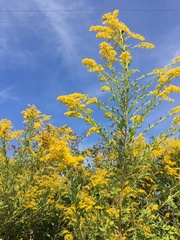
S. altissimaTall GoldenrodiNatFSUSFNA
Semplesubsect. Triplinerviae
Flora of North AmericaHeads (15–)100–1200+, secund, in secund, pyramidal, paniculiform arrays, branches divergent and recurved, sometimes ascending-divergent, sometimes merely club-shaped thyrsiform in small plants, 5–30 × 2–25 cm (often 1.5–2 times as long as wide in southern plants)
what lives on it22 galls · 10 caterpillars
22 gall forms
- Eurosta solidaginis the ball gall
- Rhopalomyia solidaginis the bunch gall
- Rhopalomyia solidaginis the bunch gall
- Asteromyia carbonifera the blister gall
- Procecidochares atra
- Epiblema scudderiana the spindle gall
- Gnorimoschema gallaesolidaginis the elliptical gall
- Asphondylia solidaginis
- Asphondylia solidaginis
- Schizomyia racemicola
- Asphondylia monacha
- Rhopalomyia clarkei
- Rhopalomyia anthophila
- Asteromyia modesta
- Asteromyia tumifica
- Rhopalomyia racemicola
- Rhopalomyia thompsoni
- Rhopalomyia sp. cone gall
- Rhopalomyia sp. cylindrical smooth gall
- unidentified hairy ovoid gall
- unidentified petiole blister
- gall midge sp. midrib swelling
10 caterpillars recorded
- Gnorimoschema gallaesolidaginis Goldenrod Elliptical-Gall Moth larva iNat
- Cremastobombycia solidaginis Goldenrod Leafminer larva iNat
- Astrotischeria solidagonifoliella larva iNat
- Condica videns White-dotted Groundling larva iNat
- Cucullia asteroides Asteroid Moth larva iNat
- Melanchra adjuncta Hitched Arches larva iNat
- Spodoptera Armyworm Moths larva iNat
- Epiblema scudderiana Goldenrod Gall Moth unstated iNat
- Eucosma unstated iNat
- Lioptilodes albistriolatus Mousy Plume Moth adult only iNat
larva is feeding evidence; adult only may be nectaring, not feeding. Names link to their entry here; iNat opens the observations.
- 19
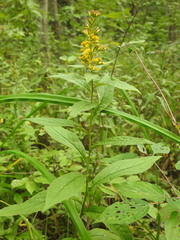
S. rugosaWrinkle-leaf GoldenrodiNatFSUSFNA
Semplesubsect. Venosae
Flora of North AmericaHeads 50–1500 , secund, in secund-pyramidal paniculiform arrays 7–36(–50) × 9–26 cm, compact to lax, branches divergent and recurved, longest 0.8–34 cm, leafy-bracteate
what lives on it19 galls · 7 caterpillars
19 gall forms
- Eurosta solidaginis the ball gall
- Rhopalomyia solidaginis the bunch gall
- Rhopalomyia solidaginis the bunch gall
- Asteromyia carbonifera the blister gall
- Procecidochares atra
- Procecidochares atra
- Rhopalomyia capitata the giant bunch gall
- Rhopalomyia capitata the giant bunch gall
- Eutreta novaeboracensis the rhizome gall
- Dasineura folliculi
- Rhopalomyia clarkei
- Eurosta comma
- Asphondylia rosulata
- Asphondylia rosulata
- Asteromyia tumifica
- Lasioptera solidaginis
- Gnorimoschema sp. pyriform stem swelling
- unidentified petiolate leaf cluster
- unidentified small fusiform stem swelling
7 caterpillars recorded
- Gnorimoschema gallaesolidaginis Goldenrod Elliptical-Gall Moth larva iNat
- Epiblema scudderiana Goldenrod Gall Moth larva iNat
- Cucullia convexipennis Brown-hooded Owlet larva iNat
- Euplexia benesimilis American Angle Shades larva iNat
- Cremastobombycia solidaginis Goldenrod Leafminer adult only iNat
- Bucculatrix unstated iNat
- Scrobipalpula sacculicola unstated iNat
larva is feeding evidence; adult only may be nectaring, not feeding. Names link to their entry here; iNat opens the observations.
- 17
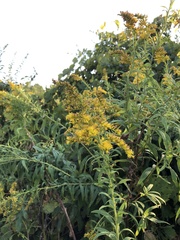
S. canadensisNorthern Common GoldenrodiNatFSUSFNA
Semplesubsect. Triplinerviae
Flora of North AmericaHeads (70–)150–1300+ , secund, in secund pyramidal-paniculiform arrays (obscurely so and club-shaped thyrsiform in small plants or shoots with small arrays), branches divergent and recurved, branches and peduncles hairy
what lives on it17 galls · 16 caterpillars
17 gall forms
- Eurosta solidaginis the ball gall
- Rhopalomyia solidaginis the bunch gall
- Rhopalomyia solidaginis the bunch gall
- Asteromyia carbonifera the blister gall
- Procecidochares atra
- Procecidochares atra
- Epiblema scudderiana the spindle gall
- Gnorimoschema gallaesolidaginis the elliptical gall
- Rhopalomyia capitata the giant bunch gall
- Rhopalomyia capitata the giant bunch gall
- Eutreta novaeboracensis the rhizome gall
- Schizomyia racemicola
- Asteromyia tumifica
- Lasioptera solidaginis
- Rhopalomyia sp. cylindrical smooth gall
- unidentified petiole blister
- gall midge sp. midrib swelling
16 caterpillars recorded
- Epiblema scudderiana Goldenrod Gall Moth larva iNat
- Anania funebris White-spotted Sable larva iNat
- Coleophora Casebearers larva iNat
- Condica videns White-dotted Groundling larva iNat
- Cucullia asteroides Asteroid Moth larva iNat
- Cucullia convexipennis Brown-hooded Owlet larva iNat
- Eupithecia absinthiata Wormwood Pug larva iNat
- Eupithecia virgaureata Golden-rod Pug larva iNat
- Plusiinae Plusiine Looper Moths larva iNat
- Schinia nundina Goldenrod Flower Moth larva iNat
- Synchlora aerata Wavy-lined and Southern Emeralds larva iNat
- Gnorimoschema gallaesolidaginis Goldenrod Elliptical-Gall Moth unstated iNat
- Cremastobombycia solidaginis Goldenrod Leafminer adult only iNat
- Celastrina argiolus Holly Blue adult only iNat
- Gnorimoschema jocelynae unstated iNat
- Danaus plexippus Monarch adult only iNat
larva is feeding evidence; adult only may be nectaring, not feeding. Names link to their entry here; iNat opens the observations.
- 16
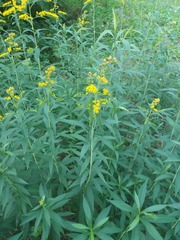
S. giganteaEastern Smooth GoldenrodiNatFSUSFNA
Semplesubsect. Serotinae
Flora of North AmericaHeads 40–600 , secund, in broadly secund, pyramidal paniculiform arrays, rarely rhombic or club-shaped, proximal branches divergent, recurved, glabrous-glabrate or strigose, sometimes glaucous
what lives on it16 galls · 4 caterpillars
16 gall forms
- Eurosta solidaginis the ball gall
- Asteromyia carbonifera the blister gall
- Epiblema scudderiana the spindle gall
- Gnorimoschema gallaesolidaginis the elliptical gall
- Rhopalomyia capitata the giant bunch gall
- Rhopalomyia capitata the giant bunch gall
- Asphondylia solidaginis
- Schizomyia racemicola
- Dasineura folliculi
- Asteromyia modesta
- Asphondylia rosulata
- Gnorimoschema jocelynae
- Rhopalomyia inquisitor
- Coleosporium solidaginis
- Rhopalomyia sp. cylindrical smooth gall
- gall midge sp. midrib swelling
4 caterpillars recorded
- Gnorimoschema jocelynae larva iNat
- Cremastobombycia solidaginis Goldenrod Leafminer unstated iNat
- Epiblema scudderiana Goldenrod Gall Moth unstated iNat
- Gnorimoschema gallaesolidaginis Goldenrod Elliptical-Gall Moth unstated iNat
larva is feeding evidence; adult only may be nectaring, not feeding. Names link to their entry here; iNat opens the observations.
- 11
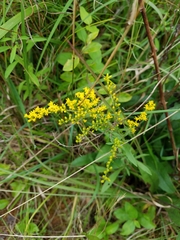
S. junceaEarly GoldenrodiNatFSUSFNA
Semplesubsect. Junceae
Flora of North AmericaHeads 60–450 , secund, in paniculiform arrays, openly secund-pyramidal with proximal branches spreading-recurved, or as broad as long with proximal branches widely ascending, recurved (elm-tree shaped)
what lives on it11 galls · 2 caterpillars
11 gall forms
2 caterpillars recorded
- Gnorimoschema salinaris larva iNat
- Astrotischeria solidagonifoliella unstated iNat
larva is feeding evidence; adult only may be nectaring, not feeding. Names link to their entry here; iNat opens the observations.
- 9
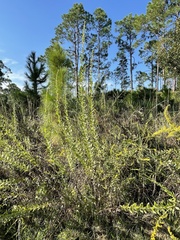
S. fistulosaHairy Pineywoods GoldenrodiNatFSUSFNA
Semplesubsect. Venosae
Flora of North AmericaHeads 35–500, in paniculiform arrays, usually dense, branches recurved-secund
what lives on it9 galls · 1 caterpillar
9 gall forms
1 caterpillar recorded
- Gnorimoschema gallaesolidaginis Goldenrod Elliptical-Gall Moth unstated iNat
larva is feeding evidence; adult only may be nectaring, not feeding. Names link to their entry here; iNat opens the observations.
- 8
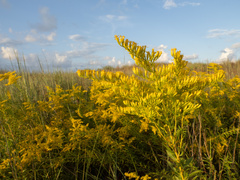
S. odoraLicorice GoldenrodiNatFSUSFNA
Semplesect. Odorae
Flora of North AmericaHeads (20–)75–350, in paniculiform arrays, openly secund, pyramidal, proximal to mid branches ascending to spreading, recurved, secund, 3–18 cm
what lives on it8 galls · 2 caterpillars
8 gall forms
2 caterpillars recorded
- Condica videns White-dotted Groundling larva iNat
- Gnorimoschema gallaesolidaginis Goldenrod Elliptical-Gall Moth unstated iNat
larva is feeding evidence; adult only may be nectaring, not feeding. Names link to their entry here; iNat opens the observations.
- 6
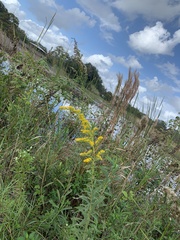
S. leavenworthiiLeavenworth's GoldenrodiNatFSUSFNA
Semplesubsect. Triplinerviae
Flora of North AmericaHeads 50–350, in secund, usually elongate, pyramidal paniculiform arrays, branches recurved and secund
what lives on it6 galls
6 gall forms
larva is feeding evidence; adult only may be nectaring, not feeding. Names link to their entry here; iNat opens the observations.
- 6
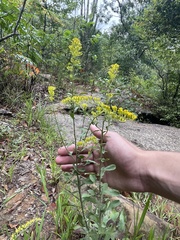
S. nemoralisEastern Gray GoldenrodiNatFSUSFNA
Semplesubg. Nemorales
Flora of North AmericaHeads 10–300, secund, in wandlike pyramidal, paniculiform arrays, secund to apically recurved, 8–25 × 2.5–10 cm, sometimes proximal branches elongate, repeating pattern
what lives on it6 galls · 2 caterpillars
6 gall forms
2 caterpillars recorded
- Cucullia alfarata Camphorweed Owlet larva iNat
- Astrotischeria solidagonifoliella unstated iNat
larva is feeding evidence; adult only may be nectaring, not feeding. Names link to their entry here; iNat opens the observations.
- 5
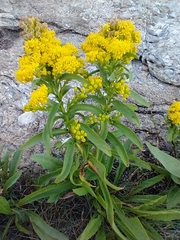
S. sempervirensNorthern Seaside GoldenrodiNatFSUSFNA
Semplesect. Maritimae
Flora of North AmericaHeads 20–500 , secund, in paniculiform arrays, secund-pyramidal to broadly club-shaped, sometimes leafy proximally, at least proximal branches spreading-recurved, branches and peduncles bracteolate, bracteoles reduced distally
what lives on it5 galls · 5 caterpillars
5 gall forms
5 caterpillars recorded
- Archips purpurana Omnivorous Leafroller larva iNat
- Gnorimoschema salinaris unstated iNat
- Epiblema scudderiana Goldenrod Gall Moth unstated iNat
- Gnorimoschema gallaesolidaginis Goldenrod Elliptical-Gall Moth unstated iNat
- Stigmella unstated iNat
larva is feeding evidence; adult only may be nectaring, not feeding. Names link to their entry here; iNat opens the observations.
- 4
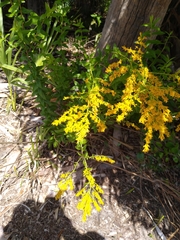
S. chapmaniiChapman’s GoldenrodiNatFSUS
Semplesect. Odorae
placed by handNo FNA array sentence. Semple places it beside S. odora and S. fistulosa, both plumes.
what lives on it4 galls · 1 caterpillar
4 gall forms
1 caterpillar recorded
- Gnorimoschema unstated iNat
larva is feeding evidence; adult only may be nectaring, not feeding. Names link to their entry here; iNat opens the observations.
- 3
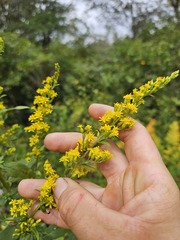
S. latissimifoliaCoastal Swamp GoldenrodiNatFSUSFNA
Semplesubsect. Venosae
Flora of North AmericaHeads 35–800 , in paniculiform arrays, sometimes leafy-bracteate, with short or elongate, slightly to strongly recurved, secund branches
what lives on it3 galls · 1 caterpillar
3 gall forms
1 caterpillar recorded
- Gnorimoschema unstated iNat
larva is feeding evidence; adult only may be nectaring, not feeding. Names link to their entry here; iNat opens the observations.
- 3
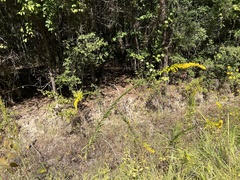
S. mexicanaSouthern Seaside GoldenrodiNatFSUS
Semplesect. Maritimae
placed by handNo FNA array sentence. Semple's account describes an elongated, narrow, secund array, like S. sempervirens.
what lives on it3 galls · 2 caterpillars
3 gall forms
2 caterpillars recorded
- Astrotischeria solidagonifoliella unstated iNat
- Gnorimoschema salinaris unstated iNat
larva is feeding evidence; adult only may be nectaring, not feeding. Names link to their entry here; iNat opens the observations.
- 3
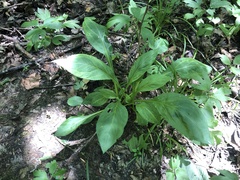
S. patulaNorthern Roughleaf GoldenrodiNatFSUSFNA
Semplesubsect. Patulae
Flora of North AmericaHeads 25–200, secund, in open, lax, secund, pyramidal, paniculiform arrays, branches ascending to recurved, often elongate with recurved ends
what lives on it3 galls · 2 caterpillars
2 caterpillars recorded
- Cremastobombycia solidaginis Goldenrod Leafminer unstated iNat
- Gnorimoschema unstated iNat
larva is feeding evidence; adult only may be nectaring, not feeding. Names link to their entry here; iNat opens the observations.
- 3
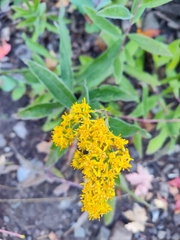
S. velutinavelvety goldenrodiNatFNA
Semplesubsect. Radulae
Flora of North AmericaHeads (2–)30–500, in narrow to broad, thyrsiform to secund-pyramidal paniculiform arrays, branches recurved, secund, congested to lax
what lives on it3 galls · 1 caterpillar
3 gall forms
1 caterpillar recorded
- Gnorimoschema unstated iNat
larva is feeding evidence; adult only may be nectaring, not feeding. Names link to their entry here; iNat opens the observations.
- 2
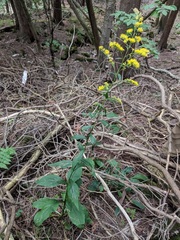
S. argutaForest GoldenrodiNatFSUSFNA
Semplesubsect. Argutae
Flora of North AmericaHeads 25–250, secund, in open, leafy, paniculiform arrays with recurved branches (sometimes elongate), branches and peduncles hairy
what lives on it2 galls
larva is feeding evidence; adult only may be nectaring, not feeding. Names link to their entry here; iNat opens the observations.
- 1
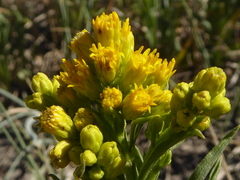
S. missouriensisEastern Missouri GoldenrodiNatFSUSFNA
Semplesubsect. Junceae
placed by handFNA calls the array broadly secund-pyramidal; its “non-secund” note applies to some heads, not to the array
what lives on it1 gall
1 gall form
larva is feeding evidence; adult only may be nectaring, not feeding. Names link to their entry here; iNat opens the observations.
- 1
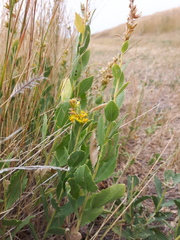
S. mollisVelvet GoldenrodiNatFSUSFNA
Semplesubsect. Radulae
Flora of North AmericaHeads (5–)50–300, in compact thyrsiform to secund-pyramidal paniculiform arrays, proximal branches ascending, sometimes apically recurved or branches spreading, recurved, secund
what lives on it1 gall · 1 caterpillar
1 gall form
1 caterpillar recorded
- Gnorimoschema gallaesolidaginis Goldenrod Elliptical-Gall Moth unstated iNat
larva is feeding evidence; adult only may be nectaring, not feeding. Names link to their entry here; iNat opens the observations.
- 1
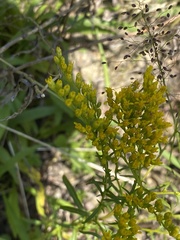
S. pinetorumPineywoods GoldenrodiNatFSUSFNA
Semplesubsect. Junceae
Flora of North AmericaHeads 50–350 , secund, in paniculiform arrays, openly secund-pyramidal with proximal branches spreading recurved, or as broad as long with proximal branches widely ascending, recurved (elm-tree shaped)
what lives on it1 gall
1 gall form
larva is feeding evidence; adult only may be nectaring, not feeding. Names link to their entry here; iNat opens the observations.
- 1
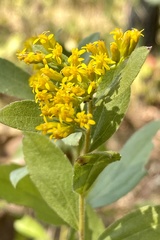
S. radulaRough GoldenrodiNatFSUSFNA
Semplesubsect. Radulae
Flora of North AmericaHeads 20–260, in paniculiform arrays, narrowly to broadly secund, pyramidal, branches recurved, secund
what lives on it1 gall
1 gall form
larva is feeding evidence; adult only may be nectaring, not feeding. Names link to their entry here; iNat opens the observations.
- 1
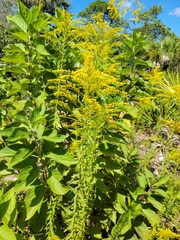
S. tortifoliaLeafy Pineywoods GoldenrodiNatFSUSFNA
Semplesubsect. Triplinerviae
Flora of North AmericaHeads 100–300+, in short to elongate, pyramidal paniculiform arrays, branches recurved, secund
what lives on it1 gall
1 gall form
larva is feeding evidence; adult only may be nectaring, not feeding. Names link to their entry here; iNat opens the observations.
- ·
S. salicinaSouthern Roughleaf GoldenrodFSUS
Semplesubsect. Patulae
placed by handNo FNA array sentence. Semple treats it in the S. patula complex, and S. patula is a plume.
Club- or wand-like
One erect spike, tapering or club-shaped, with the heads set all the way round the axis rather than along one side.
16 species · 24 host–gall records
Club- or wand-like
One erect spike, tapering or club-shaped, with the heads set all the way round the axis rather than along one side.
16 species · 24 host–gall records
The heads are set all the way round the stem, which the flora calls non-secund, and that is the one character this group needs. If you can turn the stem and the flowers keep facing you, the plant belongs here. Showy, hairy and downy goldenrod are in this group.
- 4
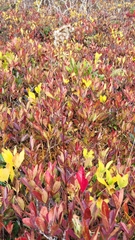
S. uliginosaNorthern Bog GoldenrodiNatFSUSFNA
Semplesect. Maritimae
Flora of North AmericaHeads 35–230 in elongate paniculiform arrays, sometimes narrow and secund pyramidal, usually narrowly to broadly, non-secund thyrsiform; branches strongly ascending with non-secund heads to arching with heads secund
what lives on it4 galls · 3 caterpillars
4 gall forms
3 caterpillars recorded
- Coleophora Casebearers larva iNat
- Gnorimoschema gallaesolidaginis Goldenrod Elliptical-Gall Moth unstated iNat
- Gnorimoschema gallaeasterella unstated iNat
larva is feeding evidence; adult only may be nectaring, not feeding. Names link to their entry here; iNat opens the observations.
- 3
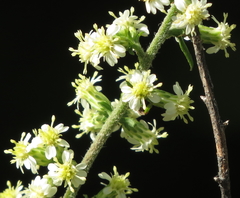
S. bicolorSilverrod, White GoldenrodiNatFSUSFNA
Semplesubsect. Erectae
Flora of North AmericaHeads 12–270 (1–15 per branch) in usually wand-shaped paniculiform arrays , of short axillary and terminal racemiform, non-secund clusters, sometimes proximal branches elongated, ascending and bearing short axillary and terminal racemiform clusters
what lives on it3 galls · 1 caterpillar
1 caterpillar recorded
- Dichomeris flavocostella Cream-edged Dichomeris Moth unstated iNat
larva is feeding evidence; adult only may be nectaring, not feeding. Names link to their entry here; iNat opens the observations.
- 2
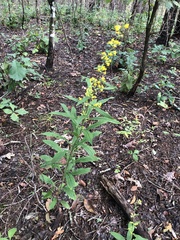
S. buckleyiBuckley’s GoldenrodiNatFSUSFNA
Semplesect. Thyrsiflorae
Flora of North AmericaHeads 5–160 (2–10+ more per short branch cluster), in narrowly elongate paniculiform arrays, branches usually 1–6 cm (much longer in damaged plants, sometimes 1–3 proximal branches much elongated in undamaged plants), ascending and bearing short terminal racemiform or paniculiform clusters
what lives on it2 galls
larva is feeding evidence; adult only may be nectaring, not feeding. Names link to their entry here; iNat opens the observations.
- 2

S. erectaSlender GoldenrodiNatFSUSFNA
Semplesubsect. Erectae
Flora of North AmericaHeads 15–350 (1–10 per branch), clustered on short divergent lateral branches in elongate and usually narrowly paniculiform arrays, often interrupted proximally, not secund, sometimes with ascending, straight or arching, elongate branches (like main axis)
what lives on it2 galls
larva is feeding evidence; adult only may be nectaring, not feeding. Names link to their entry here; iNat opens the observations.
- 2
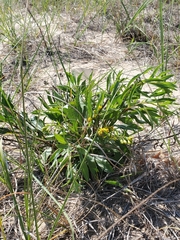
S. gillmaniiDune GoldenrodiNat
Semplesubsect. Humiles
placed by handNo FNA array sentence. Semple treats it as S. simplex var. gillmanii, in subsect. Humiles with S. spathulata, a wand; all of sect. Erectae is wand.
what lives on it2 galls
larva is feeding evidence; adult only may be nectaring, not feeding. Names link to their entry here; iNat opens the observations.
- 2
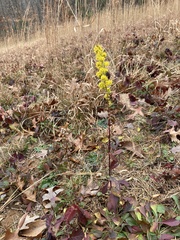
S. puberulaDowny GoldenrodiNatFSUSFNA
Semplesubsect. Erectae
Flora of North AmericaHeads 15–250 , not secund, in elongate, paniculiform arrays, lateral racemiform clusters short and ascending, sometimes lateral branches elongated and sharply ascending
what lives on it2 galls
larva is feeding evidence; adult only may be nectaring, not feeding. Names link to their entry here; iNat opens the observations.
- 2
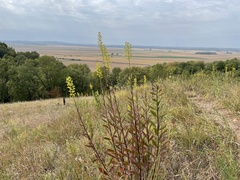
S. rigidiusculaNarrowleaf Showy GoldenrodiNatFSUS
Semplesubsect. Erectae
placed by handNo FNA array sentence. Semple treats it in the S. speciosa complex, and S. speciosa is a wand.
what lives on it2 galls · 2 caterpillars
2 caterpillars recorded
- Melanchra adjuncta Hitched Arches larva iNat
- Gnorimoschema gallaespeciosum unstated iNat
larva is feeding evidence; adult only may be nectaring, not feeding. Names link to their entry here; iNat opens the observations.
- 2
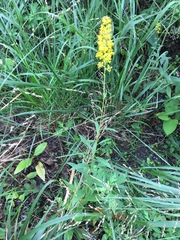
S. speciosaShowy Goldenrod, Noble GoldenrodiNatFSUSFNA
Semplesubsect. Erectae
Flora of North AmericaHeads 15–300+ , not secund, in usually dense, sometimes open, elongate, paniculiform to thyrsiform arrays, (5–)10–45 × (2–)3–7(–12) cm; branches strongly ascending, often racemiform
what lives on it2 galls
larva is feeding evidence; adult only may be nectaring, not feeding. Names link to their entry here; iNat opens the observations.
- 1
Semplesubsect. Humiles
placed by handNo FNA array sentence. Semple's account describes the array as wand-shaped.
what lives on it1 gall
1 gall form
larva is feeding evidence; adult only may be nectaring, not feeding. Names link to their entry here; iNat opens the observations.
- 1
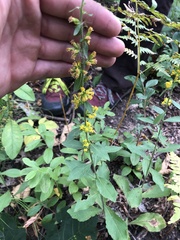
S. hispidaHairy GoldenrodiNatFSUSFNA
Semplesubsect. Erectae
Flora of North AmericaHeads 8–250+ in usually wand-paniculiform arrays of short axillary and terminal racemiform, non-secund clusters, sometimes proximal branches elongated, ascending and bearing short axillary and terminal racemiform clusters
what lives on it1 gall · 2 caterpillars
1 gall form
2 caterpillars recorded
- Gnorimoschema unstated iNat
- Bucculatrix staintonella unstated iNat
larva is feeding evidence; adult only may be nectaring, not feeding. Names link to their entry here; iNat opens the observations.
- 1
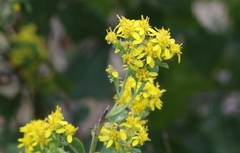
S. petiolarisDowny GoldenrodiNatFSUSFNA
Semplesect. Thyrsiflorae
Flora of North AmericaHeads 10–190+ in paniculiform (rarely racemiform) arrays, usually elongate, usually leafy-bracteate, bracts similar to distal leaves but reduced; branches stiffly ascending, not secund, sometimes elongate
what lives on it1 gall · 1 caterpillar
1 gall form
1 caterpillar recorded
- Gnorimoschema gallaesolidaginis Goldenrod Elliptical-Gall Moth unstated iNat
larva is feeding evidence; adult only may be nectaring, not feeding. Names link to their entry here; iNat opens the observations.
- 1
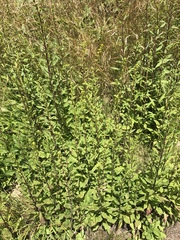
S. roanensisRoan Mountain GoldenrodiNatFSUSFNA
Semplesubsect. Erectae
Flora of North AmericaHeads 50–250, in elongate, narrowly paniculiform arrays, leafy-bracteate proximally, not secund, proximal branches sometimes elongated and ascending
what lives on it1 gall
1 gall form
larva is feeding evidence; adult only may be nectaring, not feeding. Names link to their entry here; iNat opens the observations.
- 1
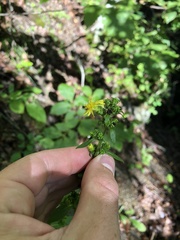
S. squarrosaRagged Goldenrod, Stout Goldenrod, Squarrose GoldenrodiNatFSUSFNA
Semplesect. Squarrosae
Flora of North AmericaHeads 20–200, not secund, in narrow, elongate arrays of axillary and terminal racemiform clusters, branches and peduncles hairy, leafy-bracteate proximally
what lives on it1 gall
1 gall form
larva is feeding evidence; adult only may be nectaring, not feeding. Names link to their entry here; iNat opens the observations.
- ·
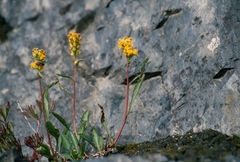
S. spathulatacoast goldenrodiNatFNA
Semplesubsect. Humiles
Flora of North AmericaHeads 5–100+, not secund, in paniculiform arrays, or virgate to thyrsiform in robust plants, consisting of axillary and terminal racemiform clusters
- ·
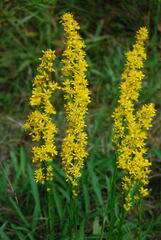
S. strictaPine Barren Bog GoldenrodiNatFSUSFNA
Semplesect. Maritimae
Flora of North AmericaHeads 15–250 , sometimes secund on proximal branches and secund terminus, in linear, narrowly elongate paniculiform to elongate pyramidal-secund or thyrsiform-paniculiform and not secund arrays, sometimes with a few elongate proximal, arching branches
what lives on it1 caterpillar
1 caterpillar recorded
- Spilosoma virginica Virginian Tiger Moth larva iNat
larva is feeding evidence; adult only may be nectaring, not feeding. Names link to their entry here; iNat opens the observations.
- ·
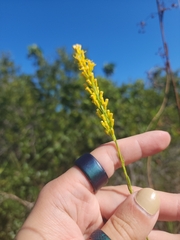
S. virgataWand GoldenrodiNatFSUS
Semplesect. Maritimae
placed by handNo FNA array sentence. Semple describes a narrow, wand-like array whose lower branches are never elongated.
Elm-branched
An open spray whose lowest branches are much the longest, springing out sideways and arching over, the silhouette of an elm.
3 species · 8 host–gall records
Elm-branched
An open spray whose lowest branches are much the longest, springing out sideways and arching over, the silhouette of an elm.
3 species · 8 host–gall records
The elm-branched group is the subtlest of the five, and the one field guides warn you about, because a loose plume and a tight elm look alike. The flora's wording separates them: in this group the lower branches are described as elongate and widely divergent, where a plume's are only recurved. All three plants here belong to the subsection Semple named after the group. Some plants do sit between the two shapes. The flora describes early goldenrod, filed under plumes above, as taking either an openly secund-pyramidal form or one it calls, in as many words, elm-tree shaped.
- 5
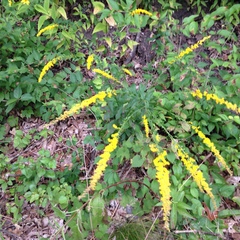
S. ulmifoliaElmleaf GoldenrodiNatFSUSFNA
Semplesubsect. Ulmifoliae
Flora of North AmericaHeads 20–150, secund, in open paniculiform arrays, proximal branches elongate and widely divergent, sometimes pyramidal-secund with proximal branches short and recurved-secund
what lives on it5 galls · 1 caterpillar
5 gall forms
1 caterpillar recorded
- Gnorimoschema gallaesolidaginis Goldenrod Elliptical-Gall Moth unstated iNat
larva is feeding evidence; adult only may be nectaring, not feeding. Names link to their entry here; iNat opens the observations.
- 2
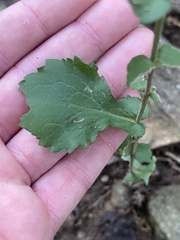
S. auriculataEared GoldenrodiNatFSUSFNA
Semplesubsect. Ulmifoliae
placed by handFSUS places it in subsection Ulmifoliae
what lives on it2 galls · 1 caterpillar
1 caterpillar recorded
- Gnorimoschema unstated iNat
larva is feeding evidence; adult only may be nectaring, not feeding. Names link to their entry here; iNat opens the observations.
- 1
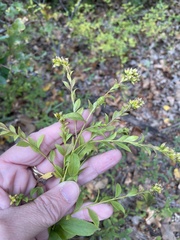
S. delicatulaSmooth Elmleaf GoldenrodiNatFSUSFNA
Semplesubsect. Ulmifoliae
placed by handFSUS places it in subsection Ulmifoliae
what lives on it1 gall
1 gall form
larva is feeding evidence; adult only may be nectaring, not feeding. Names link to their entry here; iNat opens the observations.
Flat-topped
A level or slightly domed head, corymbiform, the outer stalks longer so that every flower finishes at the same height.
13 species · 29 host–gall records
Flat-topped
A level or slightly domed head, corymbiform, the outer stalks longer so that every flower finishes at the same height.
13 species · 29 host–gall records
The flat top is easy to recognise. In classification these are the least settled plants in the genus: several have been moved in and out of a separate genus, Oligoneuron, more than once. All six Euthamia are flat-topped too, although they are a separate genus.
- 11
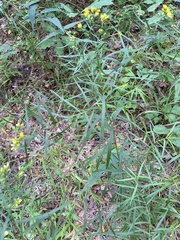
E. graminifoliaNorthern Smooth GoldentopiNatFSUSFNA
placed by handgenus-level: FNA describes Euthamia heads as corymbiform
what lives on it11 galls · 6 caterpillars
11 gall forms
6 caterpillars recorded
- Cucullia asteroides Asteroid Moth larva iNat
- Papaipema larva iNat
- Spilosoma larva iNat
- Epiblema desertana unstated iNat
- Acrocercops astericola Aster Tentiform Blotchminer unstated iNat
- Bucculatrix unstated iNat
larva is feeding evidence; adult only may be nectaring, not feeding. Names link to their entry here; iNat opens the observations.
- 4
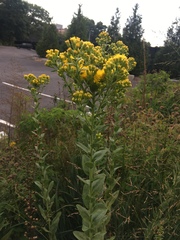
S. rigidaMidwestern Bold GoldenrodiNatFSUSFNA
Semplesect. Ptarmicoidei
Flora of North AmericaHeads 9–190, in corymbiform arrays, compact or branches long and spreading, densely hairy throughout
what lives on it4 galls · 3 caterpillars
4 gall forms
3 caterpillars recorded
- Astrotischeria solidagonifoliella unstated iNat
- Danaus plexippus Monarch adult only iNat
- Gnorimoschema gallaesolidaginis Goldenrod Elliptical-Gall Moth unstated iNat
larva is feeding evidence; adult only may be nectaring, not feeding. Names link to their entry here; iNat opens the observations.
- 3
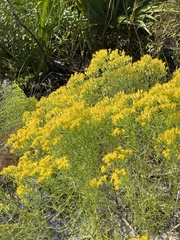
E. carolinianaCarolina GoldentopiNatFSUSFNA
placed by handgenus-level: FNA describes Euthamia heads as corymbiform
what lives on it3 galls · 1 caterpillar
1 caterpillar recorded
- Epiblema desertana unstated iNat
larva is feeding evidence; adult only may be nectaring, not feeding. Names link to their entry here; iNat opens the observations.
- 3
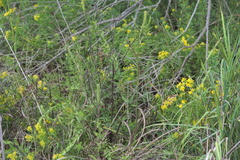
E. leptocephalaNarrowhead GoldentopiNatFSUSFNA
placed by handgenus-level: FNA describes Euthamia heads as corymbiform
what lives on it3 galls · 1 caterpillar
1 caterpillar recorded
- Epiblema desertana unstated iNat
larva is feeding evidence; adult only may be nectaring, not feeding. Names link to their entry here; iNat opens the observations.
- 2
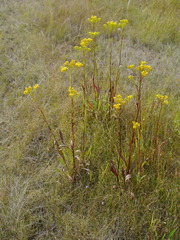
S. ohioensisOhio GoldenrodiNatFSUSFNA
Semplesect. Ptarmicoidei
Flora of North AmericaHeads 10–500+ in corymbiform arrays, branches glabrous
what lives on it2 galls · 2 caterpillars
2 caterpillars recorded
- Astrotischeria solidagonifoliella unstated iNat
- Gnorimoschemini unstated iNat
larva is feeding evidence; adult only may be nectaring, not feeding. Names link to their entry here; iNat opens the observations.
- 1
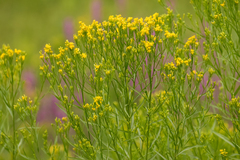
E. occidentaliswestern goldenrodiNatFNA
placed by handgenus-level: FNA describes Euthamia heads as corymbiform
what lives on it1 gall · 1 caterpillar
1 gall form
1 caterpillar recorded
- Lepidoptera Butterflies and Moths larva iNat
larva is feeding evidence; adult only may be nectaring, not feeding. Names link to their entry here; iNat opens the observations.
- 1
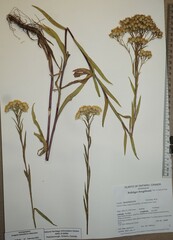
S. houghtoniiHoughton's goldenrodiNatFNA
Semplesect. Ptarmicoidei
Flora of North AmericaHeads (2–)5–50(–100+), not secund, in corymbiform arrays, branches and peduncles glabrous or moderately strigillose
what lives on it1 gall
1 gall form
larva is feeding evidence; adult only may be nectaring, not feeding. Names link to their entry here; iNat opens the observations.
- 1
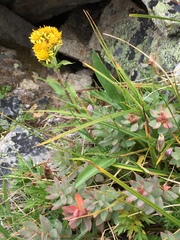
S. multiradiatanorthern goldenrodiNatFNA
Semplesect. Multiradiatae
Flora of North AmericaHeads 4–75(–100+) , not secund, in dense, round-topped corymbiform arrays; branches white villous
what lives on it1 gall
1 gall form
larva is feeding evidence; adult only may be nectaring, not feeding. Names link to their entry here; iNat opens the observations.
- 1
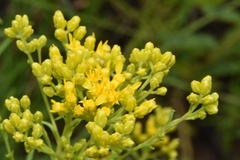
S. nitidaShiny GoldenrodiNatFSUSFNA
Semplesect. Ptarmicoidei
Flora of North AmericaHeads 20–150+ in compactly corymbiform arrays, sometimes somewhat rounded
what lives on it1 gall
1 gall form
larva is feeding evidence; adult only may be nectaring, not feeding. Names link to their entry here; iNat opens the observations.
- 1
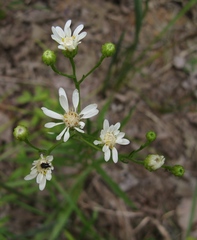
S. ptarmicoidesWhite Prairie-goldenrod, Upland White AsteriNatFSUSFNA
Semplesect. Ptarmicoidei
Flora of North AmericaHeads 1–25(–50) , in corymbiform arrays
what lives on it1 gall · 1 caterpillar
1 gall form
1 caterpillar recorded
- Scythrididae Flower Moths adult only iNat
larva is feeding evidence; adult only may be nectaring, not feeding. Names link to their entry here; iNat opens the observations.
- 1
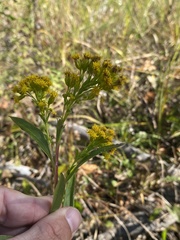
S. riddelliiRiddell's GoldenrodiNatFSUSFNA
Semplesect. Ptarmicoidei
Flora of North AmericaHeads 30–450 in corymbiform to somewhat paniculiform with rounded corymbiform branches (robust plants) arrays, branches and peduncles strigillose
what lives on it1 gall · 1 caterpillar
1 gall form
1 caterpillar recorded
- Ponometia candefacta Olive-shaded Bird-dropping Moth adult only iNat
larva is feeding evidence; adult only may be nectaring, not feeding. Names link to their entry here; iNat opens the observations.
- ·
placed by handgenus-level: FNA describes Euthamia heads as corymbiform
- ·
placed by handgenus-level: FNA describes Euthamia heads as corymbiform
Flowering from the leaf axils
No plume at all. Small clusters sit in the angle between leaf and stem, all the way up an arching, often unbranched stem.
4 species · 10 host–gall records
Flowering from the leaf axils
No plume at all. Small clusters sit in the angle between leaf and stem, all the way up an arching, often unbranched stem.
4 species · 10 host–gall records
These are the woodland goldenrods, and they look so unlike the rest that people meeting blue-stemmed or zigzag goldenrod in September commonly do not recognise the genus. They grow in shade, and they carry a thin scatter of flowers where the other groups carry a mass.
- 3
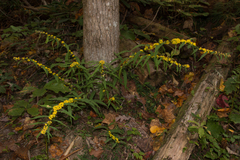
S. caesiaAxillary GoldenrodiNatFSUSFNA
Semplesect. Glomeruliflorae
Flora of North AmericaHeads 9–380, in short, secund, axillary and terminal racemo-paniculiform clusters (4.4–)13–36(–58) cm
what lives on it3 galls · 5 caterpillars
5 caterpillars recorded
- Spilosoma virginica Virginian Tiger Moth larva iNat
- Gnorimoschema gallaeasterella adult only iNat
- Acrocercops astericola Aster Tentiform Blotchminer unstated iNat
- Gnorimoschema gallaesolidaginis Goldenrod Elliptical-Gall Moth unstated iNat
- Stigmella quercipulchella unstated iNat
larva is feeding evidence; adult only may be nectaring, not feeding. Names link to their entry here; iNat opens the observations.
- 3
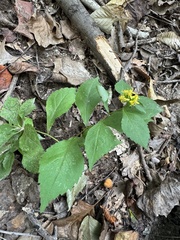
S. flexicaulisZigzag Goldenrod, Broad-leaved GoldenrodiNatFSUSFNA
Semplesect. Glomeruliflorae
Flora of North AmericaHeads 25–250, in short axillary and terminal racemiform clusters, lateral panicles (2–)7–31(–56) cm
what lives on it3 galls · 5 caterpillars
5 caterpillars recorded
- Gnorimoschema gallaeasterella larva iNat
- Crambidae Crambid Snout Moths larva iNat
- Cucullia convexipennis Brown-hooded Owlet larva iNat
- Pseudorthodes vecors Small Brown Quaker larva iNat
- Bucculatrix unstated iNat
larva is feeding evidence; adult only may be nectaring, not feeding. Names link to their entry here; iNat opens the observations.
- 3
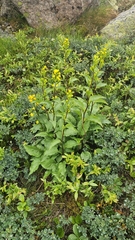
S. macrophyllalarge-leaved goldenrodiNatFNA
Semplesect. Solidago
Flora of North AmericaHeads 2–110+ (1–10 per branch) in leafy, racemiform or short, axillary and terminal racemiform-paniculiform clusters, lateral branches erect, 4–43 cm
what lives on it3 galls
larva is feeding evidence; adult only may be nectaring, not feeding. Names link to their entry here; iNat opens the observations.
- 1
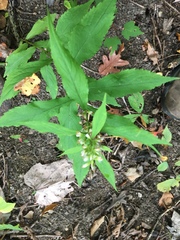
S. curtisiiCurtis’s GoldenrodiNatFSUSFNA
Semplesect. Glomeruliflorae
Flora of North AmericaHeads 20–800 in short axillary and terminal racemiform/paniculiform, non-secund arrays (2–)8.5–38.5(–65) cm
what lives on it1 gall · 1 caterpillar
1 gall form
1 caterpillar recorded
- Gnorimoschema gallaeasterella unstated iNat
larva is feeding evidence; adult only may be nectaring, not feeding. Names link to their entry here; iNat opens the observations.
How they are related
The tree below is the classification, where the five shapes above are a convenience. It shows John Semple's arrangement of Solidago into four subgenera and their sections, drawn as a bracket tree with the 52 goldenrods this guide follows at their tips. It is not a measured phylogeny: the brackets show which groups nest inside which, and they do not measure distance. The order of the branches is still not guesswork. It follows Semple's arrangement of the genus, whose backbone is a phylogenomic tree of the diploid goldenrods, hundreds of loci deep.4950 The tree shows what the flowering shapes cannot: which of these plants are close kin.
The line under each group in the tree comes from one source. Semple and Beck's 2021 paper gives a short description with most of the groups it names, and each line here is that description put into plain words.49 A few groups carry no line, because the paper names them without describing them. The lines are descriptions and not a key: they say what the members of a group share, and they will not always separate one group from the next. The two large subgenera are separated by how the heads are arranged. Subgenus Solidago has them in a single spike or a branched spray. Subgenus Pleiactila has them in one-sided cones, in flat tops, or in clusters in the leaf axils. Below that level most of the characters are in the leaves. Section Unilaterales, which holds tall and Canada goldenrod, is the group with three-nerved leaves, and section Venosae, which holds rough-stemmed goldenrod, is the group with net-veined ones.
The tree is worth reading against the galls. The two most gall-ridden goldenrods on the continent, tall (S. altissima) and Canada (S. canadensis), sit together in series Canadensae; rough-stemmed goldenrod, the plant the podcast's hosts talked themselves out of, sits in the very next section. The confusion that recurs throughout this subject is between close neighbours on this tree.
the number of gall forms recorded on that goldenroda source, listed on the reference shelf
subg. Solidago14 goldenrods
Heads in racemiform or paniculiform arrays: one unbranched spike of heads, or a branched spray.- sect. SolidagoBasal and lower stem leaves stalked. Heads generally large for the genus. Phyllaries lance-shaped, usually narrowing to a rounded tip.
- ser. MacrophyllaeS. macrophylla3 gall formsInvolucres large for the genus, and the body of the fruit hairless. Northeastern North America.
- sect. ErectaeBasal and lower stem leaves stalked. Heads mid-sized for the genus in the diploid species. Phyllaries oblong, with a rounded, blunt tip.
- subsect. Erectae
- ser. ErectaeS. erecta2 gall formsS. rigidiuscula2 gall formsS. speciosa2 gall forms
- ser. AlbigulaeS. bicolor3 gall formsS. hispida1 gall form
- ser. PuberulaeS. puberula2 gall formsS. roanensis1 gall formMiddle and upper stems densely covered in very short grey-white hairs.
- subsect. HumilesS. gillmanii2 gall formsS. glutinosa1 gall formS. spathulataUpper parts of the plant somewhat to obviously sticky and shiny.
- subsect. Erectae
- sect. SquarrosaeS. squarrosa1 gall formInvolucres cylindrical. Phyllaries lance-shaped, with a somewhat leafy tip that bends outward or back. Québec south in the mountains to North Carolina.
- sect. ThyrsifloraeS. buckleyi2 gall formsS. petiolaris1 gall formThe largest leaves are generally on the lower middle stem, and the lowest have usually dropped by flowering. Rosettes rarely present at flowering. Phyllaries mostly lance-shaped, sometimes with obvious stalked glands.
- sect. SolidagoBasal and lower stem leaves stalked. Heads generally large for the genus. Phyllaries lance-shaped, usually narrowing to a rounded tip.
subg. Pleiactila35 goldenrods
Heads in one-sided conical arrays, in flat-topped arrays, or in clusters in the leaf axils.- sect. GlomerulifloraeS. caesia3 gall formsS. curtisii1 gall formS. flexicaulis3 gall formsFlowering stems leafy, with the heads in clusters in the leaf axils. Woodlands of eastern North America.
- sect. PtarmicoideiS. houghtonii1 gall formS. nitida1 gall formS. ohioensis2 gall formsS. ptarmicoides1 gall formS. riddellii1 gall formS. rigida4 gall formsBasal rosettes usually present, and the weathered bases of old leaf stalks usually persist on the stems into the next season. Heads in flat-topped arrays. Phyllaries with several veins, except in S. ptarmicoides. These are the species that have been split off as the genus Oligoneuron.
- sect. MultiradiataeS. multiradiata1 gall formLarge heads in small flat-topped arrays, which become more branched as the lower branches develop. Mostly boreal and alpine.
- sect. MaritimaeS. mexicana3 gall formsS. sempervirens5 gall formsS. strictaS. uliginosa4 gall formsS. virgataThe stalks of the lower stem leaves sheathe the stem. Moist habitats, marshes and bogs.
- sect. Argutae
- subsect. ArgutaeS. arguta2 gall forms
- subsect. PatulaeS. patula3 gall formsS. salicinaStems ridged. Leaves rough, with minute hairs that point toward the leaf tip. Moist habitats in eastern North America.
- sect. VenosaeLeaves net-veined, not three-nerved. Lower stem leaves have often dropped by flowering. Eastern North America.
- subsect. VenosaeS. fistulosa9 gall formsS. latissimifolia3 gall formsS. rugosa19 gall formsPappus longer than the corolla tube, reaching about the bases of the corolla lobes.
- subsect. UlmifoliaeArrays usually with a few long, wide-spreading lower branches. Rosettes generally absent, and the upper stem leaves much reduced. Pappus about as long as the corolla tube.
- ser. UlmifoliaeS. delicatula1 gall formS. ulmifolia5 gall formsLeaves do not clasp the stem. Phyllaries pressed flat.
- ser. AuriculataeS. auriculata2 gall formsLeaf stalks and blades have ear-like lobes that clasp the stem. Phyllary tips spread or bend back.
- sect. UnilateralesAt least the lower stem leaves have two larger side veins, so the middle of the leaf looks three-nerved.
- subsect. TriplinerviaeNo basal rosette. Stems sparsely to densely short-hairy toward the top, often down to the base.
- ser. CanadensaeS. altissima22 gall formsS. canadensis17 gall formsLower stems hairless, or sparsely to densely grey-hairy. Lower stem leaves wither and drop. No basal rosette.
- ser. TortifoliaeS. leavenworthii6 gall formsS. tortifolia1 gall formLower stems usually finely grey-hairy. The lower middle stem leaves often stay on after they wither: twisted several times, hanging, brown to black.
- subsect. JunceaeBasal rosettes often present at flowering. Stems hairless, or sparsely hairy toward the top. Tufts of small leaves usually develop in the axils of the upper stem leaves.
- ser. JunceaeS. juncea11 gall formsS. missouriensis1 gall formS. pinetorum1 gall formArrays pyramidal to diamond-shaped, never a single spike. Leaves waxy, not fleshy, sometimes three-nerved.
- subsect. RadulaeS. mollis1 gall formS. radula1 gall formS. velutina3 gall formsLower stem leaves the largest, and three-nerved. Stems finely rough-hairy. Basal rosette sometimes present.
- subsect. SerotinaeS. gigantea16 gall formsNo basal rosette. Stem hairless to densely hairy.
- subsect. TriplinerviaeNo basal rosette. Stems sparsely to densely short-hairy toward the top, often down to the base.
subg. Nemorales1 goldenrod
S. nemoralis6 gall formsLeaves generally not three-nerved. Stem and leaf hairs soft. Leaves grey-green, sometimes whitish. Basal rosettes often present at flowering.subg. Triactis2 goldenrods
Small shrubs or herbaceous perennials. Leaves with one prominent midvein. Phyllaries lance-shaped and sharp-tipped, with well-developed translucent margins.- sect. OdoraeS. chapmanii4 gall formsS. odora8 gall formsHerbaceous perennials. Only the main vein of the leaf is prominent, and crushed leaves smell of anise. Eastern United States.
After Semple & Beck 2021 for the classification and for the description under each group, both read from the paper (Phytoneuron 2021-10: 1–6); the branching order follows their revised intuitive phylogeny, whose backbone is a phylogenomic tree of the diploid goldenrods.4950 The many polyploids and hybrids that the molecular sampling could not place are set by the classification instead. Neither published phylogeny figure is reproduced here; both are © their authors. The six Euthamia are a separate genus, in no Solidago subgenus; the guide keeps them because the field guides do.
Where they grow
These maps show the twelve goldenrods that carry the most galls. Each map has one square per state and province, placed roughly where it sits on the map: Canada along the top two rows, Alaska at the far left, Florida at the bottom. A square is filled where the plant has been recorded. A filled square means somebody found it in that state. It does not mean the plant is common there, and an empty one may only mean nobody looked.
Beside each map is the range as the Flora of the Southeastern US states it, in words, from an entirely separate source.51 The two are worth comparing, and Solidago canadensis shows why: the map has it nearly everywhere, and the flora stops it at Virginia, Ohio and Illinois. Neither source is wrong. Gallformers uses canadensis in the old broad sense, which takes in tall goldenrod and its close relatives; the flora uses the narrow modern one. This is the same disagreement two people had in a meadow in 2015, holding a plant that keyed both ways, and it has not gone away.248
44 states, 6 provinces · 22 gall forms
the flora saysNova Scotia, Québec, and Saskatchewan south to n. Georgia, n. Alabama, n. Mississippi, Arkansas, and e. Oklahoma; introduced in w. North America
32 states, 6 provinces · 19 gall forms
the flora saysNova Scotia west to Ontario, south to Georgia, Alabama, Mississippi, Louisiana, Texas
49 states, 12 provinces · 17 gall forms
the flora saysNewfoundland and Labrador (Newfoundland) west to Minnesota, south to Virginia, Ohio, and Illinois
48 states, 10 provinces · 16 gall forms
the flora saysNova Scotia west to Alberta and e. North Dakota, south to Panhandle Florida (Liberty County) and ne. Texas
37 states, 12 provinces · 11 gall forms
the flora saysNewfoundland and Labrador (Newfoundland) and Manitoba south to Maryland, c. Virginia, West Virginia, w. North Carolina, Michigan, Wisconsin, Colorado, and New Mexico
32 states, 6 provinces · 11 gall forms
the flora saysNova Scotia west to Minnesota, south to Georgia, Alabama, Mississippi, and n. Louisiana
11 states · 9 gall forms
the flora saysNew Jersey south to s. Florida, west to Louisiana
26 states · 8 gall forms
the flora saysNew Hampshire, Vermont, New York, Ohio, and Missouri south to Florida and Texas
4 states · 6 gall forms
the flora saysSe. North Carolina south to s. Florida, west to s. Alabama
42 states, 9 provinces · 6 gall forms
the flora saysNova Scotia west to North Dakota, south to Panhandle Florida and Texas
14 states, 6 provinces · 5 gall forms
the flora saysNewfoundland and Labrador (Newfoundland) south to ne. North Carolina along the coast (and introduced inland in saline situations such as along salted roadways); isolated more southern occurrences likely reflect introductions
35 states, 2 provinces · 5 gall forms
the flora saysNova Scotia, Maine, Ontario, and Minnesota, south to Florida and Texas
Every goldenrod in this guide
All 58 named plants this guide tracks. 48 have a record in the Flora of the Southeastern US; the rest are northern or western species outside its area, not species it rejects.51 49 are treated as species by Flora of North America.48 Flowering months are the southeastern flora's.