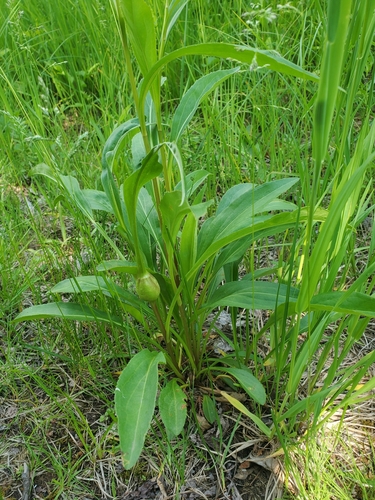
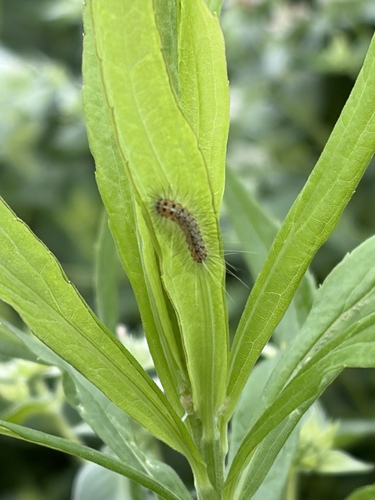
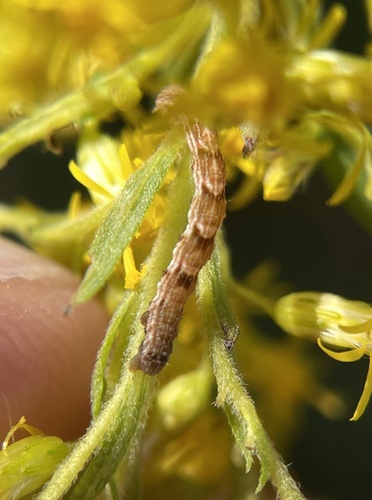
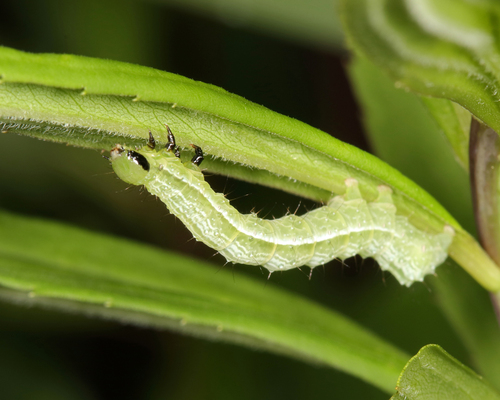
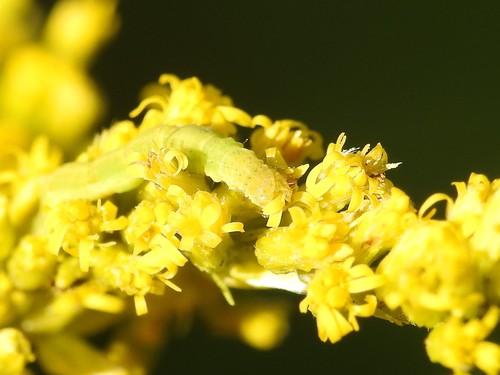
The Solidago System · the caterpillars
A hundred and four
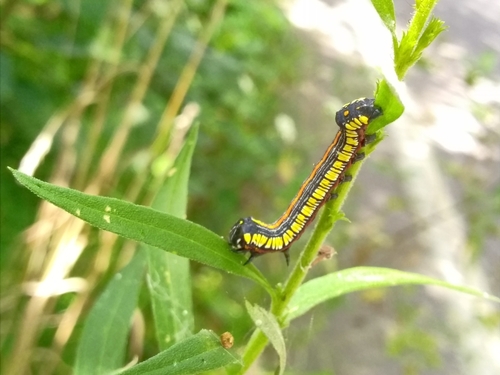
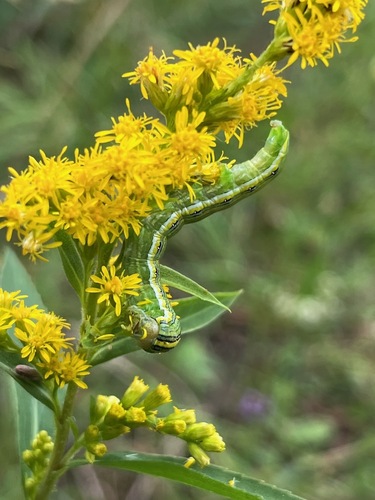
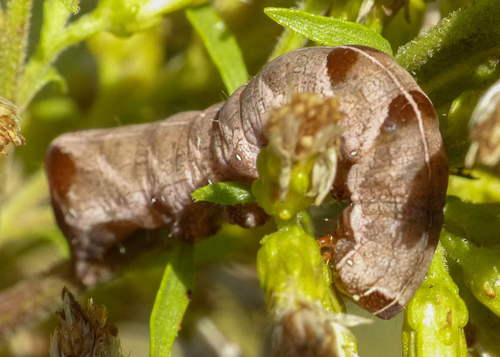
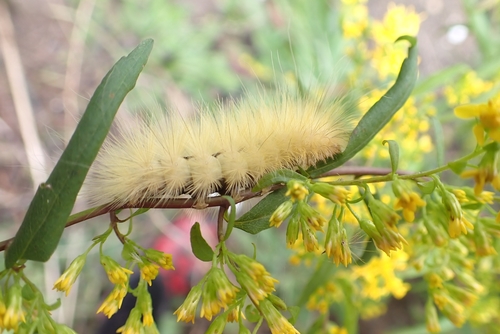
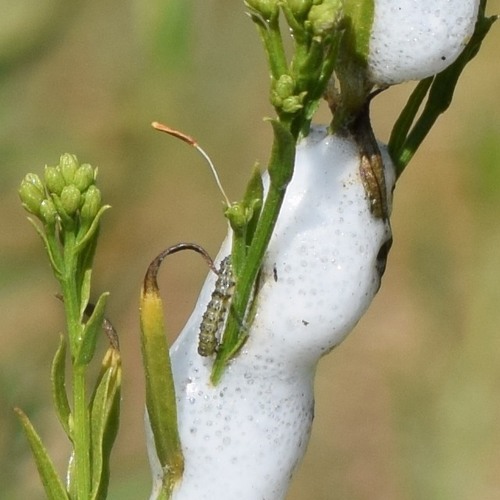
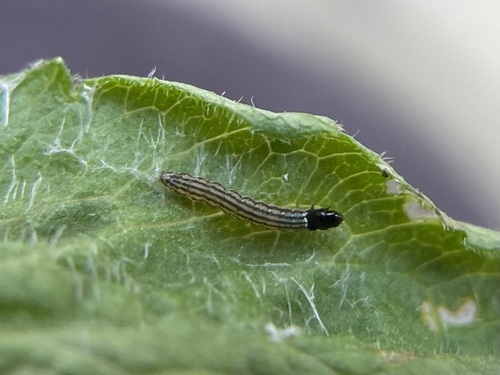
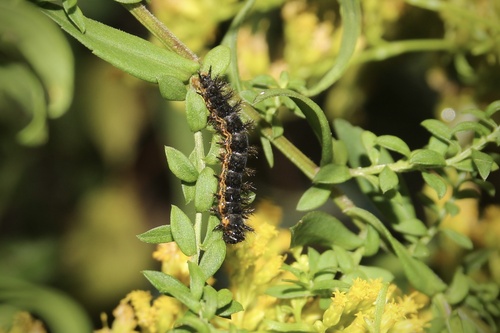
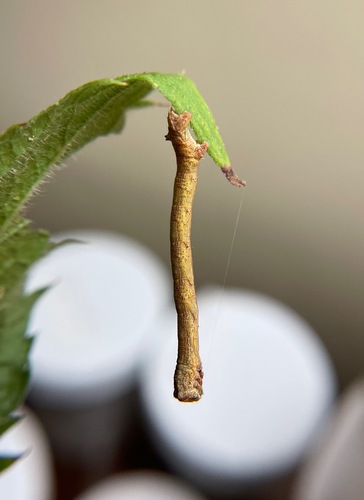
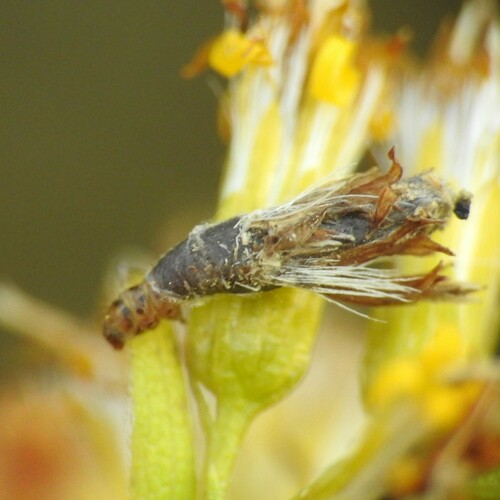
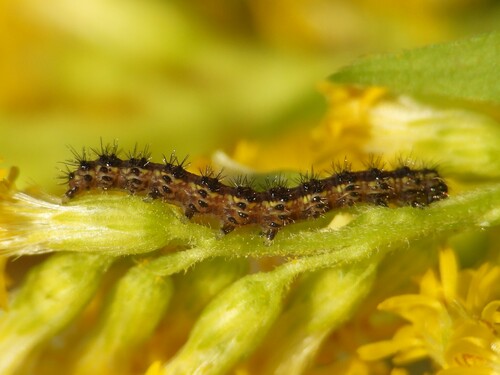
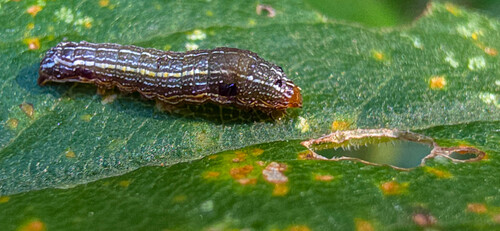
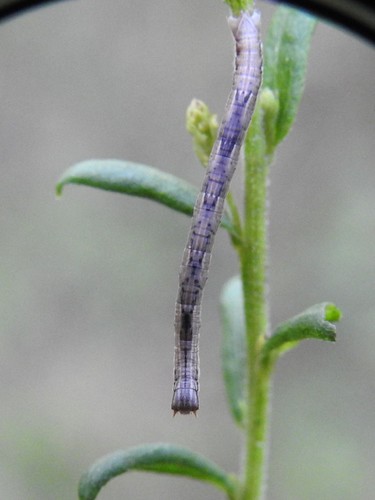
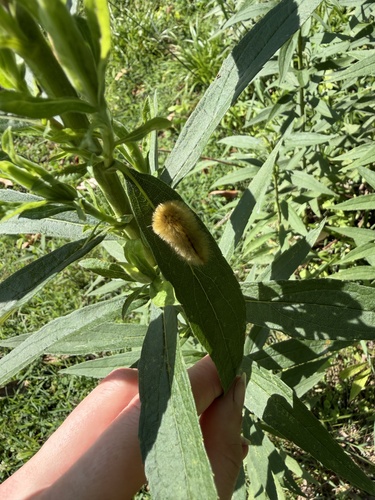
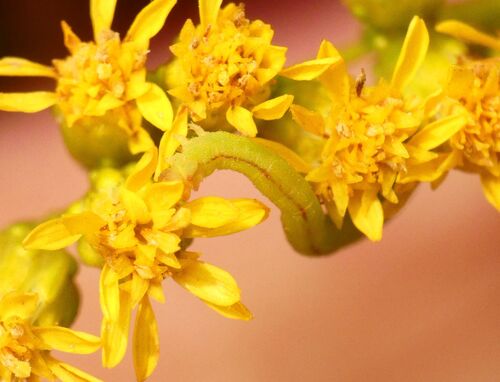
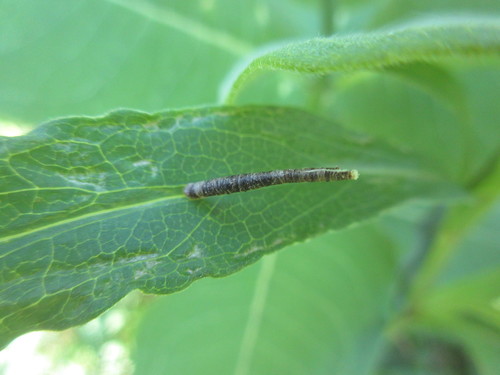
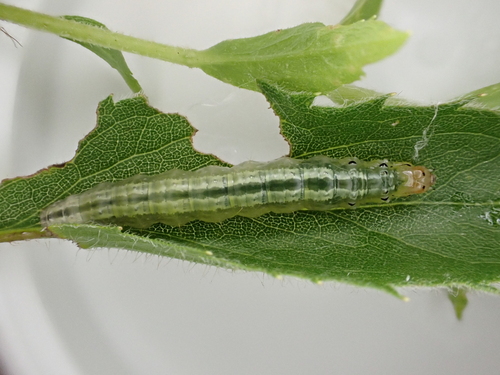
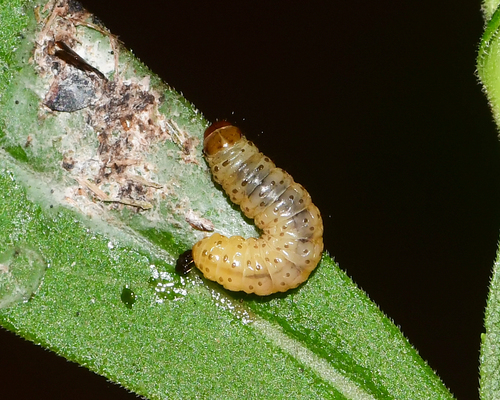
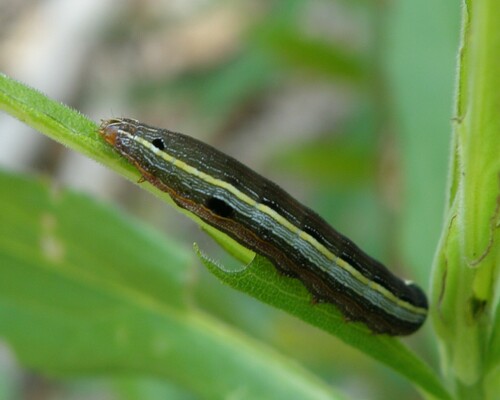
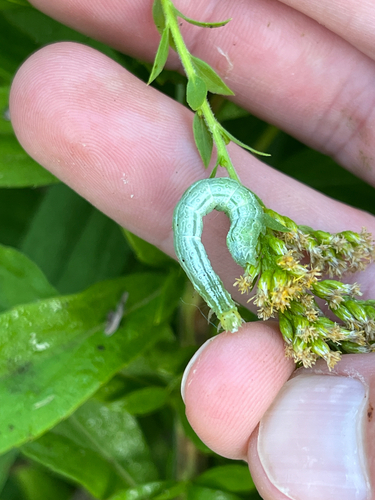
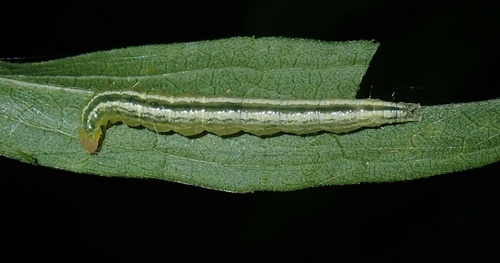
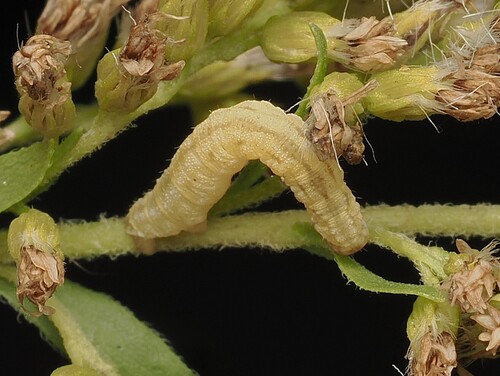
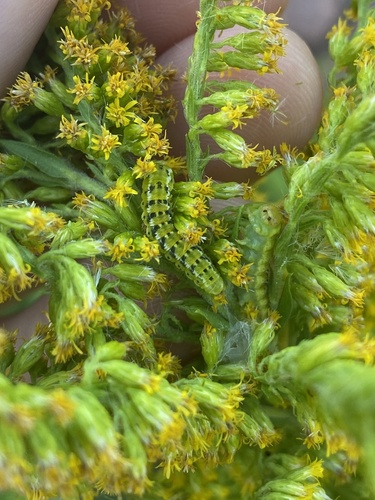
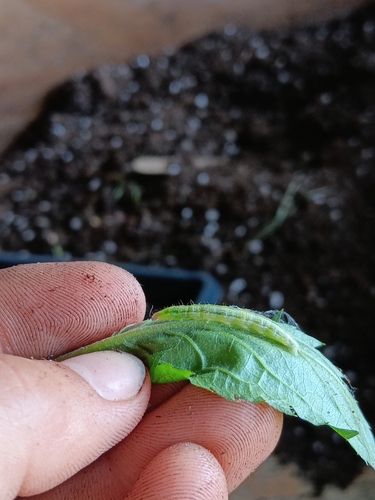
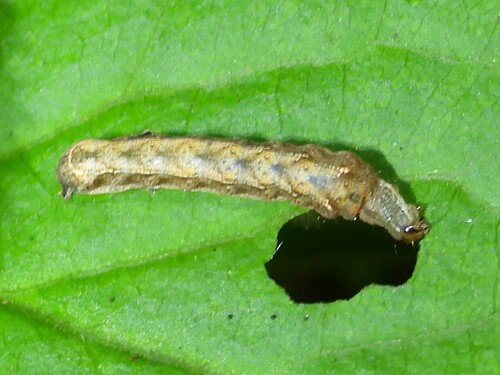
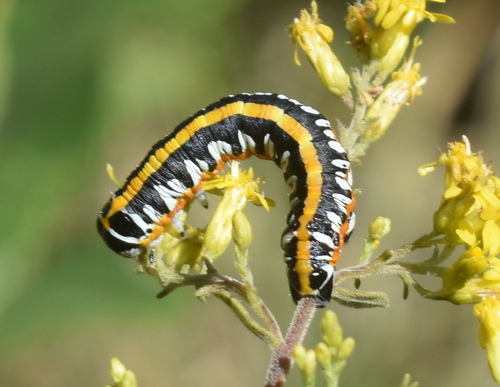
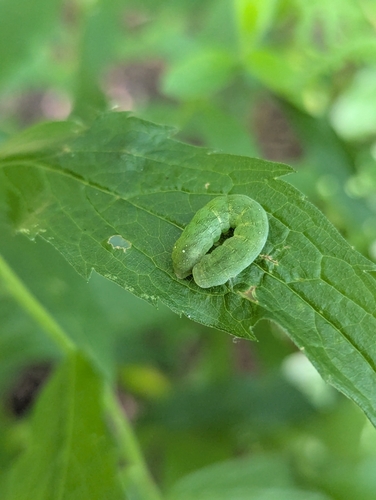
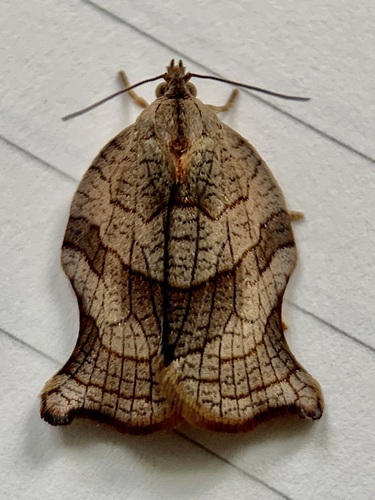
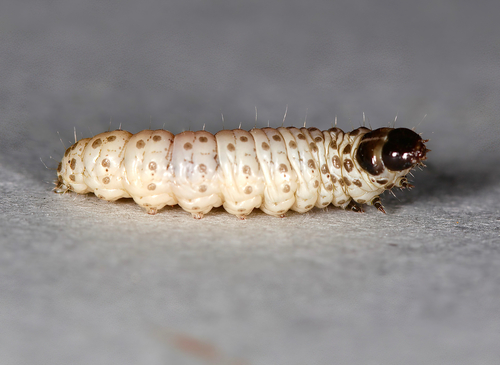
A hundred and four kinds of caterpillar have been recorded eating goldenrod, more than any other flowering perennial in the Eastern Temperate Forests, the one ecoregion the list covers. That is the reason a meadow full of Solidago is worth more than a meadow full of almost anything else. The number is not mine, and it is not a count of galls. This page puts faces to it, and shows how far short of a hundred and four the faces fall.
104on the published list
86photographed on goldenrod
58as a caterpillar
54with a usable photograph
Where the hundred and four comes from
The number comes from two linked sources. Narango, Tallamy and Shropshire assembled Lepidoptera–host records for the flora of the United States and asked which plant genera carry the most caterpillars; their answer was that a small number of genera support most of them.33 Goldenrod is not one they name, and the word Solidago does not appear in their paper at all. The ranking was restricted to woody plants: trees and shrubs host the richest caterpillar communities, so every genus it returns is a tree or a shrub. What the paper contributes is the raw dataset beneath that ranking, which the National Wildlife Federation later extended for its plant finder. The finder publishes the records by ecoregion, and for Eastern Temperate Forests it lists 104 Lepidoptera species on Solidago, more than any other flowering perennial there, alongside 42 bees that specialise on it.32 The bee figure comes from a separate specialist-bee dataset the finder carries; the keystone paper counts caterpillars only.
establishedWhat the hundred and four is the top of
A superlative is only as wide as the pool it is measured in, and this one is measured in a single ecoregion. Read off the list itself: goldenrod is first among the flowering perennials at 104, and aster (Symphyotrichum) is second at 100, a margin of four species. On the same sheet's ranked top thirty for caterpillars, twenty-three genera beat it and every one of them is a tree or a shrub: oak at 436, cherry at 340, willow at 289. That puts goldenrod twenty-fourth overall, and first among everything on the list that is not woody. The bee column orders it differently again: the 42 pollen specialists that rely on goldenrod are second to sunflower (Helianthus), which carries 50. Euthamia, the other genus in this guide, carries eight. And all of it is one ecoregion: Eastern Temperate Forests, which is not the same as the East, and not the same as the thirty-six states this guide covers.32
establishedHow big the number actually is
The study's supplementary tables give Lepidoptera richness for every plant genus in each of its 83 counties, and goldenrod is in all 83. The number is local: goldenrod carries between 43 and 139 caterpillar species depending on where you are standing, median 83. Narrow to the 38 counties inside Eastern Temperate Forests, the ecoregion the 104 is quoted for, and it tightens to 82–139 with a median of 92. Sixteen of those thirty-eight match or beat 104. Goldenrod tops the herbaceous genera in 47 of the 83 counties, out of a median of 378 herbaceous genera in each; in the other 36 something beats it, and thirty times that something is clover. Counting the trees as well, its median rank is nineteenth.33 The ecoregion figure and these county figures are not certainly the same vintage; the dataset was extended for the plant finder after publication.
establishedThe best count anyone has made
For one goldenrod, somebody has done this properly. Root, Loeffler and Rawlins sampled Solidago altissima at 43 sites in central New York over more than four years and found 63 caterpillar species in 43 genera and 13 families, 61% of the entire insect fauna on the plant.61 That 63 is a New York number. The same paper counts the same plant elsewhere and watches it collapse: ten caterpillar species on S. altissima in Florida, and fifteen in Switzerland, where the goldenrod is an introduced weed a couple of centuries off the boat.61 The plant does not change; what changes is how much fauna it has had the range and the time to gather. A caterpillar count is a fact about a plant in a place. Three of their findings bear directly on everything below. Host range is strongly conserved by lineage: the relatives of specialists are specialists, and the relatives of generalists are generalists. Few species manage stems and rhizomes at all, which is what makes the gall-makers on the other pages unusual rather than typical. And, more awkwardly, polyphagous species and exposed feeders are usually rare.
establishedA ladder into the plant
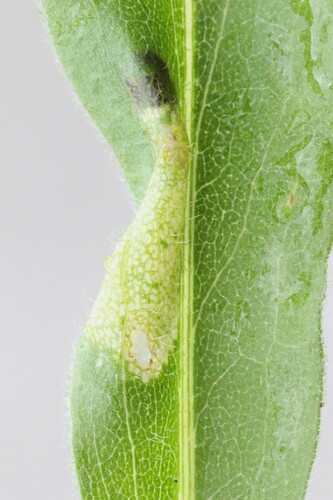
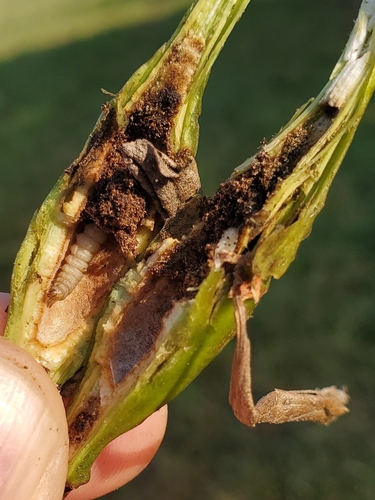
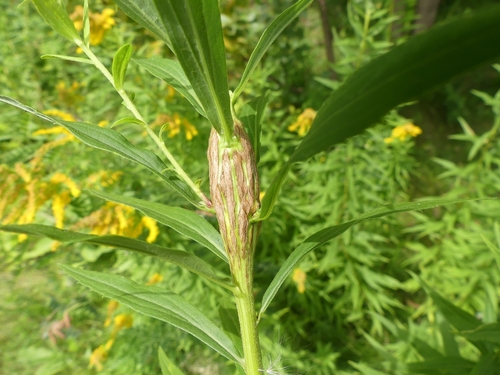
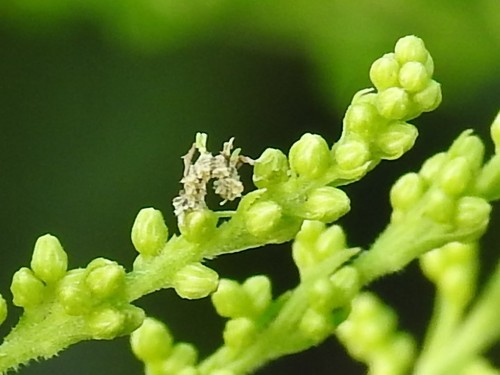
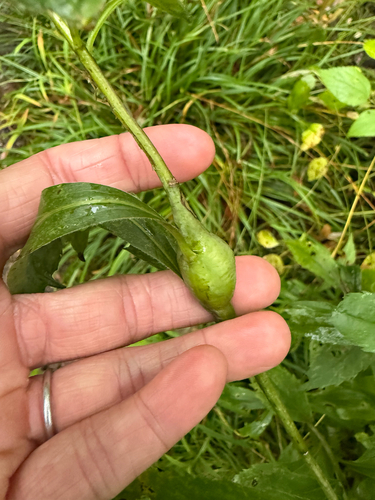
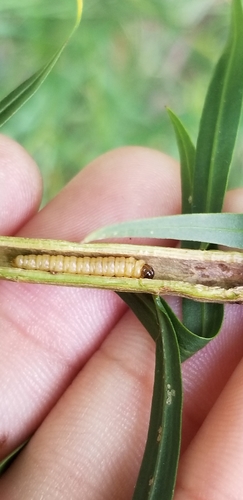
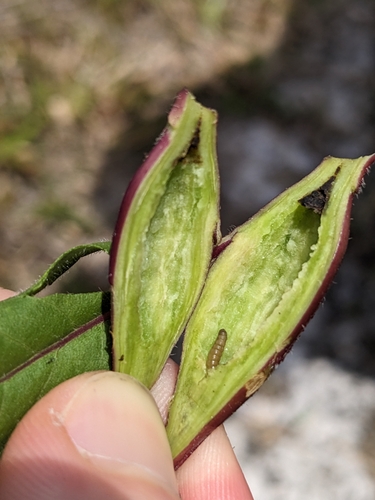
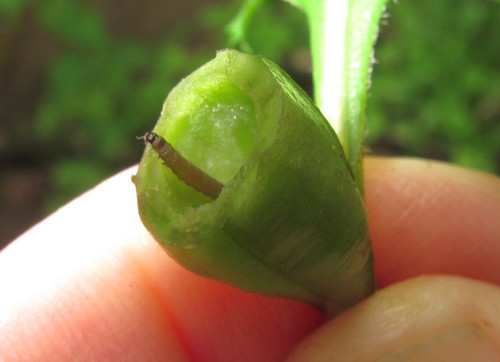
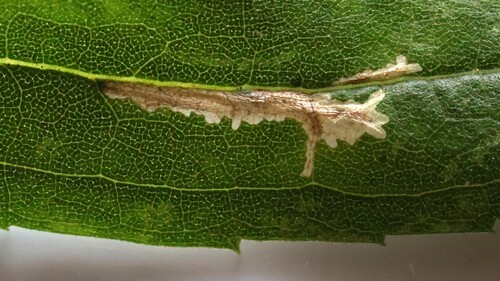
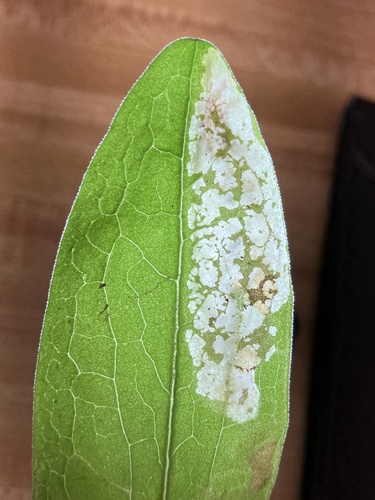
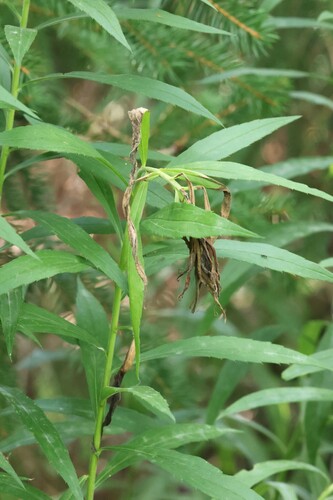
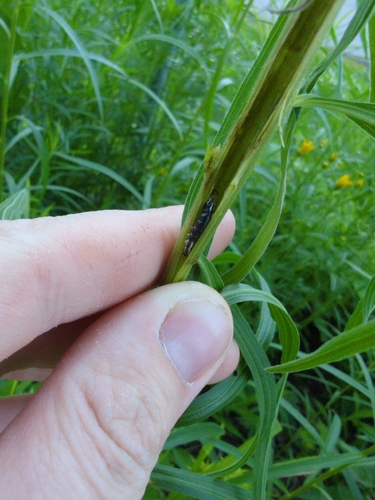
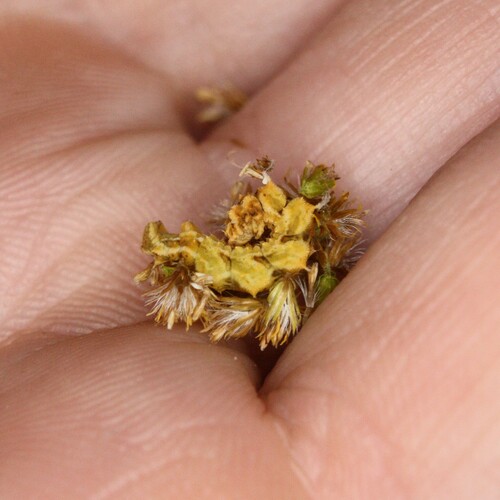
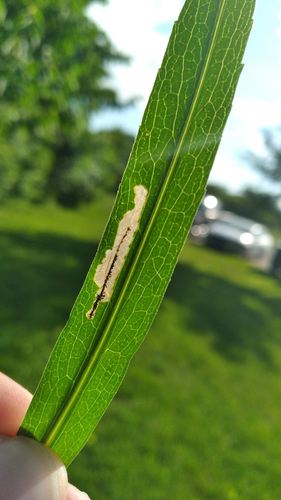
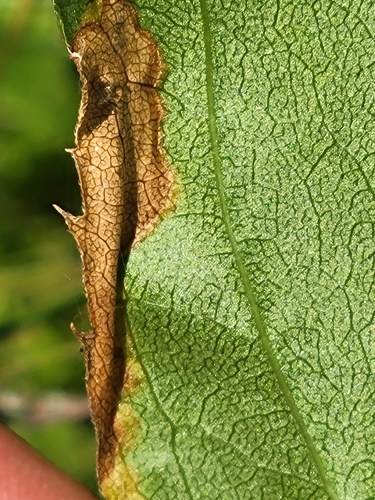
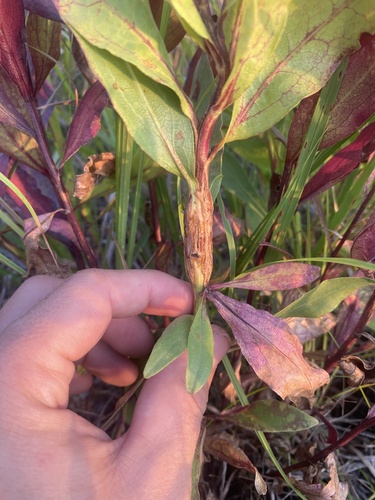
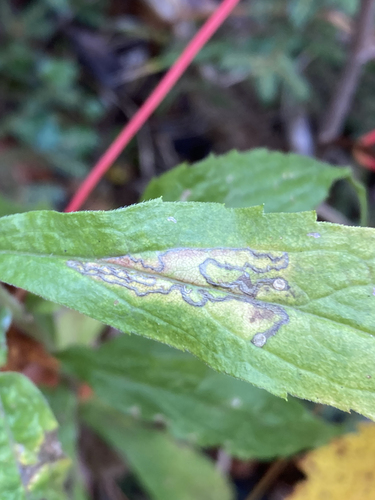
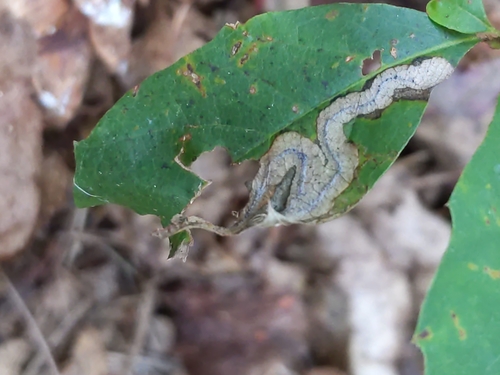
The paper's findings hang on a single idea: a caterpillar can meet a goldenrod at any depth, and where it meets it settles most of the rest. At the shallow end are the exposed feeders, chewing a leaf in the open with nowhere to hide. Then the ones that fold or tie a leaf shut around themselves, then the case-makers that build a portable shelter out of flower petals and carry it. At the deep end live the insects that get inside the plant: the leaf miners between the two skins of a leaf, the borers down the stem, and, furthest in of all, the gall-makers, which do not merely hide in the plant but make it build them a room.61 The rule Root draws from this is that the deeper an insect lives, the more surely it is a specialist and the smaller it must be, because nothing large fits inside a stem. A big exposed noctuid can eat goldenrod one week and another plant the next; the caterpillar that makes a gall is bound to a single goldenrod and small enough to spend its life inside one.61 The gall-makers on the other pages of this guide are the far end of that ladder, the most intimate association in the fauna and, of necessity, among its smallest animals.
establishedWhat this page can show, and what it cannot
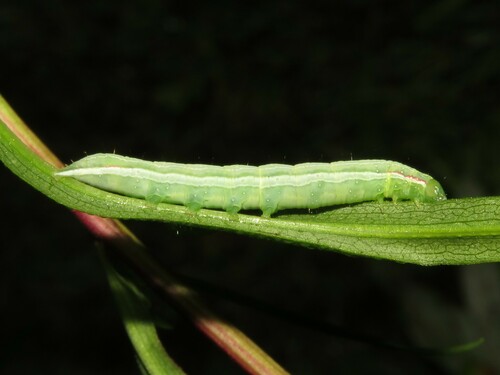
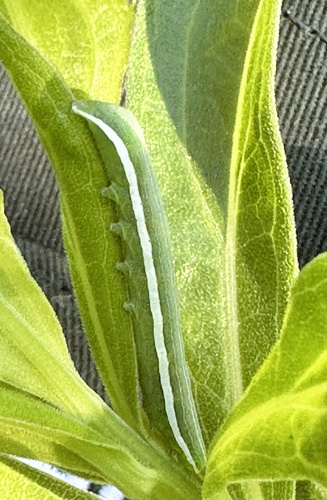
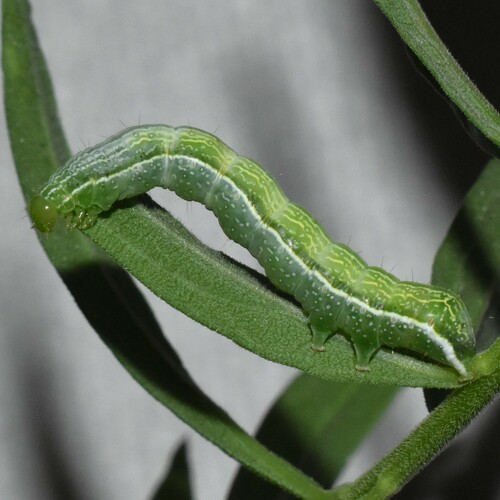
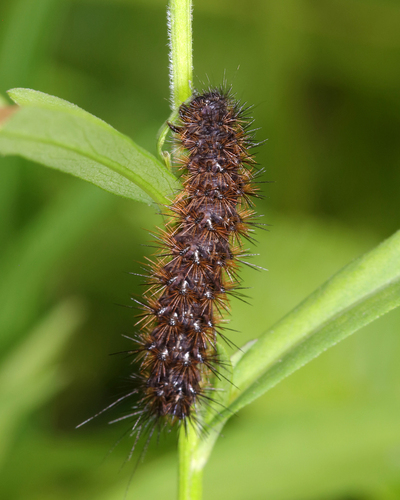
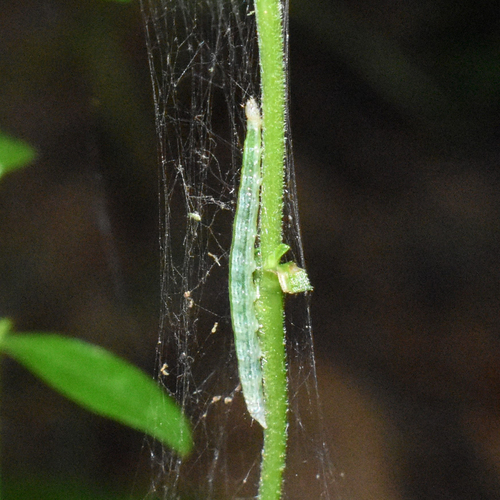
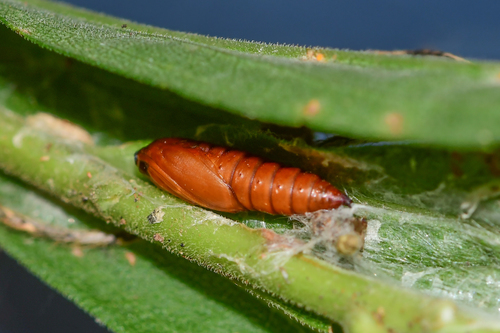
That list is compiled from a century of rearing records. It is a count, and it cannot be walked back to individual evidence; you cannot ask it to show you the caterpillar. So the gallery below is built from the opposite kind of record: observations on iNaturalist where somebody photographed the animal, named the goldenrod it was on, and left both for anyone to check.3 Every entry is one or more of those. None of them is a claim about what a moth eats; each is a claim that a photograph exists.
establishedWhy the monarch is not on this page
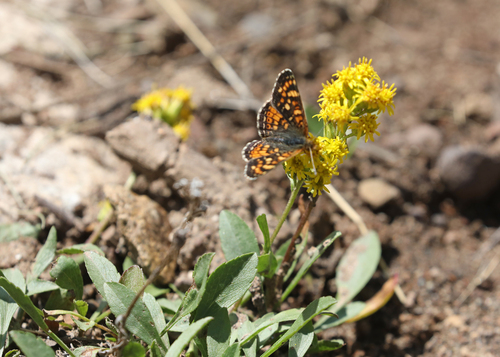
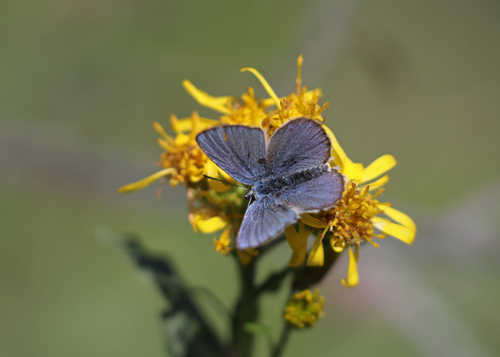
The field observers fill in is called Host Plant, and it gets used two ways: for a caterpillar's food plant, and for the flower an adult happened to be resting on. Asked without a filter, the query returns the monarch on goldenrod, and the monarch eats milkweed and nothing else. So every record here is split on whether the animal was annotated as a larva. Only that tier is treated as evidence of feeding. The ones that appear solely as adults are listed at the foot of the page rather than hidden, because which records had to be thrown out is part of the finding.
established