Asteromyia carbonifera (Osten Sacken, 1862)
the blister gallA gall midge. A fly, despite the name
The only gall here that the plant does not build. A midge carries a fungus, and the fungus makes the chamber.
Flat, roughly circular blisters five to fifteen millimetres across, raised slightly on both leaf surfaces, often ringed so that they read as small targets. Colour varies with the host: yellow, grey, buff, or purple with a pink centre and a white margin on S. canadensis; dark grey with a pale margin, blackening with age, on S. juncea. Strikingly different colours can appear on a single leaf.24
The female carries conidia of the fungus Botryosphaeria dothidea in mycangia, pockets on her ovipositor, and inoculates them as she lays. The fungal hyphae, not the plant, form the structure that encloses and feeds the larva; the fungus hardens and blackens as the larva matures and becomes incorporated into the leaf tissue.622
The association is obligate in both directions with respect to successful gall formation: without the fungus the midge cannot develop on goldenrod.22
The fungus does more than build and feed. Across the genus, the lineages that have reduced or lost their fungal partner are the ones most heavily attacked by parasitoid wasps, which suggests the hardened black wall also shields the larva from its enemies.23
Two things you can count. Where a blister sits away from the leaf edge it is round or elliptical and usually holds more than one larva; where it sits on the margin it is lunate, a crescent bitten out of the edge, and usually holds one. And size tracks the host rather than the season: five to fifteen millimetres on S. canadensis, three to four on S. juncea.24
It is multivoltine, and as the season advances galls appear on progressively higher leaves.625 It is also by far the least host-specific gall former on goldenrod, recorded from 41 goldenrod species in this region and 44 across the continent, against five for the ball gall at either scale.2
Records from many additional hosts exist on iNaturalist without a confirmed insect identification, and some may represent other Asteromyia species.2
There is reason to expect they do. The eight named species of Asteromyia hide far more than their names suggest: mitochondrial gene trees resolve many genetically distinct, host-associated lineages within them, and A. carbonifera as currently recognised is itself a complex of such lineages on different goldenrods. Its unusually wide host list may therefore be several narrower specialists read as one.23
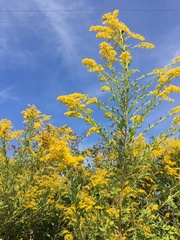 S. altissima
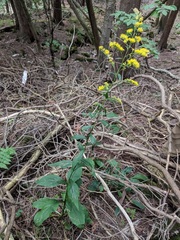 S. arguta
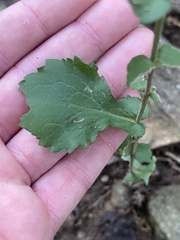 S. auriculata
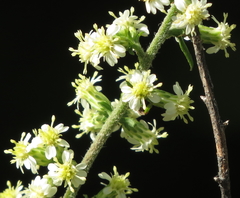 S. bicolor
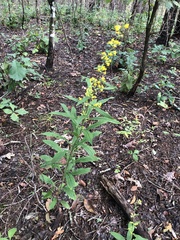 S. buckleyi
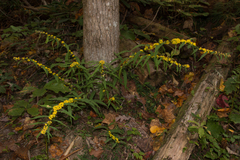 S. caesia
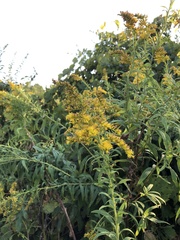 S. canadensis
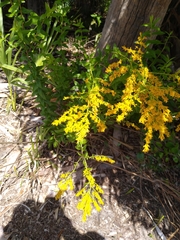 S. chapmanii
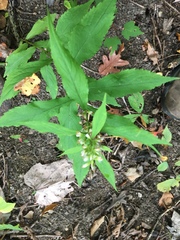 S. curtisii
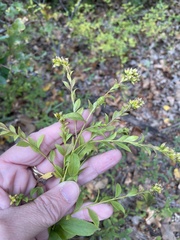 S. delicatula
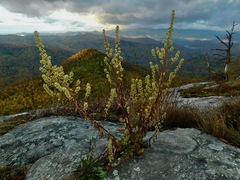 S. erecta
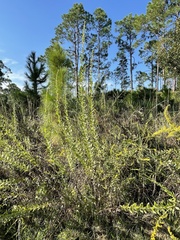 S. fistulosa
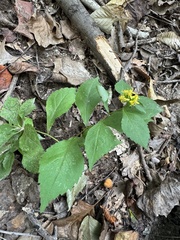 S. flexicaulis
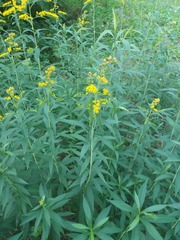 S. giganteaS. glutinosa
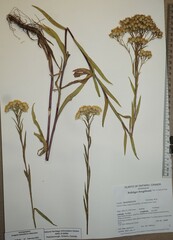 S. houghtonii
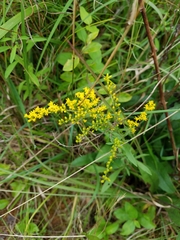 S. juncea
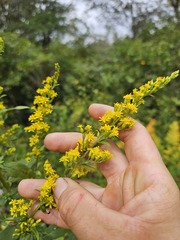 S. latissimifolia
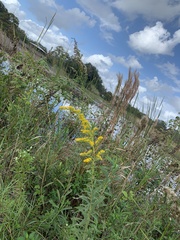 S. leavenworthii
 S. mexicana
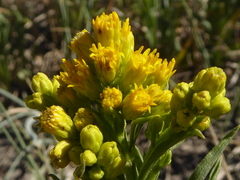 S. missouriensis
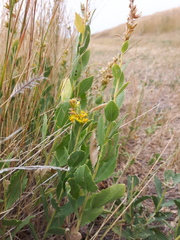 S. mollis
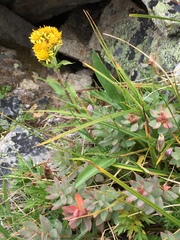 S. multiradiata
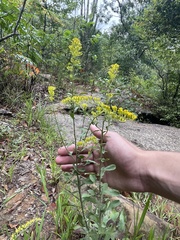 S. nemoralis
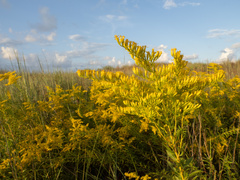 S. odora
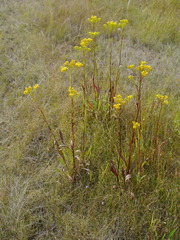 S. ohioensis
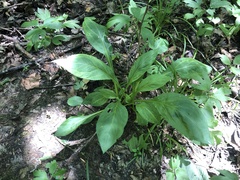 S. patula
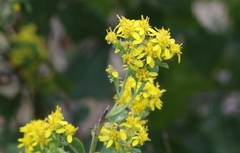 S. petiolaris
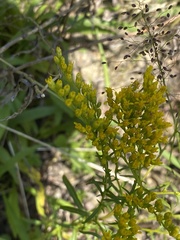 S. pinetorum
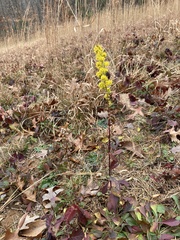 S. puberula
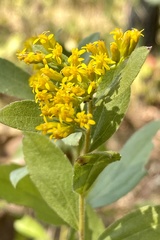 S. radula
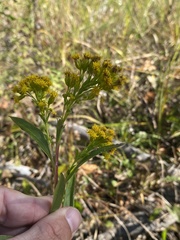 S. riddellii
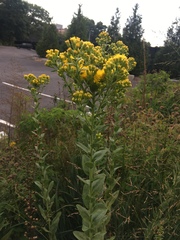 S. rigida
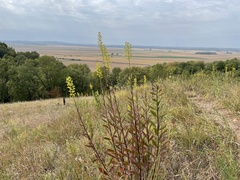 S. rigidiuscula
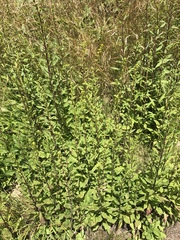 S. roanensis
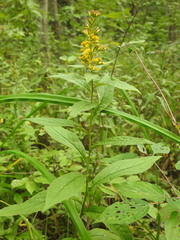 S. rugosa
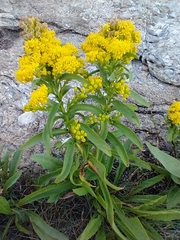 S. sempervirens
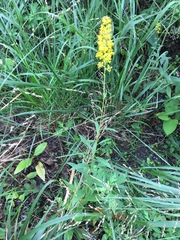 S. speciosa
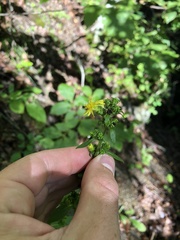 S. squarrosa
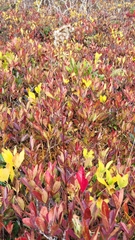 S. uliginosa
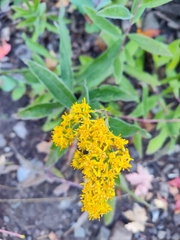 S. velutina