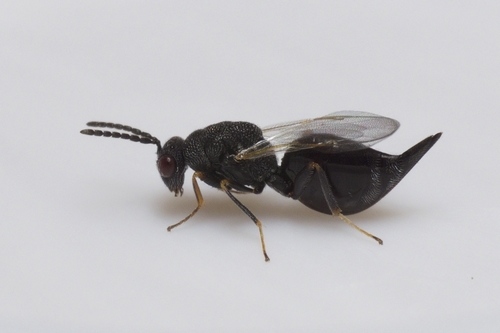
Eurosta solidaginis (Fitch, 1855)
the ball gallA fruit fly, the picture-winged kind, not the kitchen kind
A hard sphere the size of a marble, gripping the stem from the inside. The commonest gall on the commonest goldenrod, and the most intensively studied insect gall on Earth.
A female lays a single egg into the apical bud of a young shoot in mid-spring. The larva hatches, bores down into the stem, and the plant answers by building a sphere of its own tissue around it: roughly 20 mm across, thick-walled, with the larva alone at the centre in a single chamber.2
How the larva compels this has only a partial answer. Cytokinins are the plant hormones that drive cell division; four of them were identified by mass spectrometry in the gall, in normal stem, and in the larva itself. One, isopentenyladenine, sits in the larva at roughly fifty times its concentration in ordinary stem tissue, and is still there in larvae taken from galls that have finished growing.10
That paper is usually reported as having proved the insect makes its own. It did not, and it did not claim to. What it showed is that the older explanation does not work: if the larva were simply concentrating hormone drawn out of the plant, the larva should hold most of the gall's supply, and it holds a small fraction of it. Accumulation was ruled out; synthesis was the inference left standing.10 Twenty years of evidence have since gone that way. Immunolocalisation placed both cytokinin and auxin almost exclusively in the larval salivary glands.11 The obvious alternative, that a symbiotic bacterium is doing the chemistry, has been closed off twice. The phytohormone label found no Wolbachia in the salivary glands where the hormones are,11 and a 2023 assembly of the bacterium's genome found it cannot make either hormone: it lacks the precursors for cytokinin and every known pathway to auxin, and must steal what it needs from the fly.12
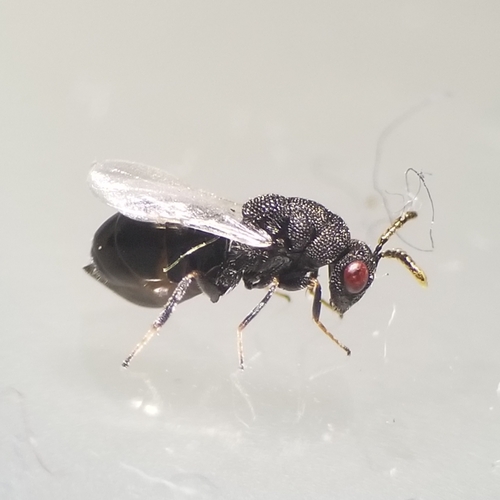
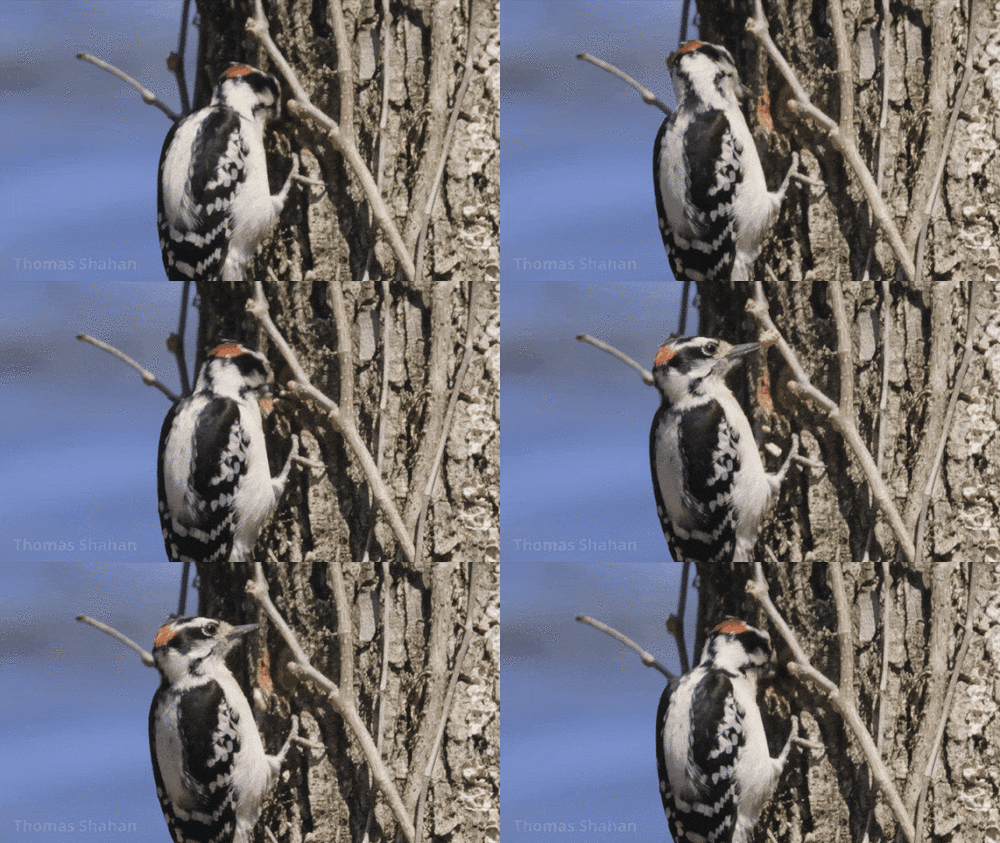
The gall is a battleground with an optimum in the middle. Small galls let the wasp Eurytoma gigantea reach the larva with its ovipositor. Large galls attract downy woodpeckers, which open them in winter. Across sixteen populations and four generations, the two pressures push in opposite directions and larvae in intermediate galls survive best.87
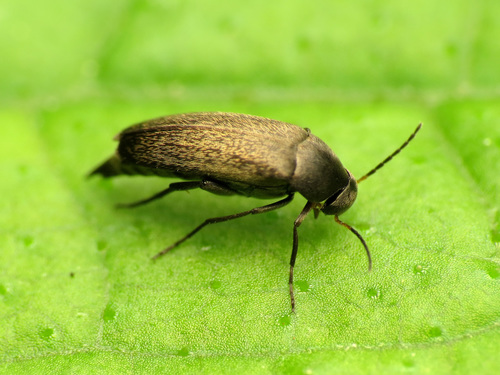
Then it freezes. The larva overwinters as a third instar and is freeze-tolerant: it permits roughly 65% of its body water to convert to extracellular ice, protected by glycerol, sorbitol and trehalose, and survives to about −35°C.13 In spring it pupates, and the adult escapes by inflating a balloon-like bladder on its head, the ptilinum, to burst the thin cap of tissue the larva cut the previous autumn.
A mild drying makes it hardier still. Larvae that lost only 6–10% of their body mass, in as little as six hours, survived freezing at −15°C far better than undried controls: a third of them came through, against nearly three-quarters of the dried. Their glycerol did not change, so this is not simply more antifreeze.14
The plant pays for this. Galled ramets produce fewer flowers, and the seed they do set germinates less successfully; stem height and existing rhizomes are reduced. The number of new rhizomes produced is not.39 The damage is real but modest, which is usual for a parasite long established on its host.
It lives about fifty weeks inside the gall and perhaps two outside it.
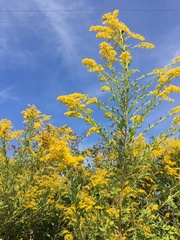 S. altissima
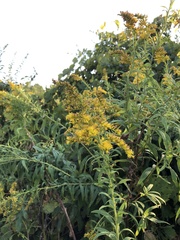 S. canadensis
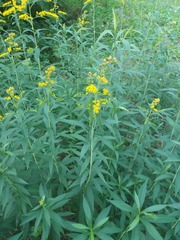 S. gigantea
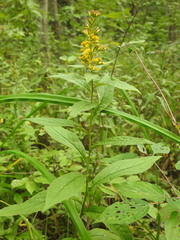 S. rugosa
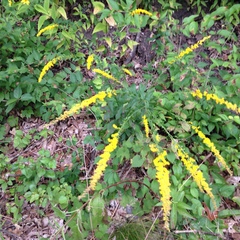 S. ulmifolia