The Solidago System · the galls
Fig. 593, the round goldenrod gall · Comstock & Comstock, A Manual for the Study of Insects, 1895, p. 48659
Cut open at the left, whole at the right. Comstock names the insect Trypeta solidaginis and files it with the Trypetinæ; the maggot inside, he writes, develops into “a pretty fly with banded wings.” It is now Eurosta solidaginis, and the parentheses in (Fitch, 1855) on its entry are the record of that move: they mean the species was first described in another genus. The same page separates the elliptical gall and gives it to Gelechia gallæsolidaginis, now Gnorimoschema gallaesolidaginis. Both genera have moved since 1895. Neither species name has.
What lives inside it
A gall is a room an insect makes a plant build. The animal, almost always a larva, releases something that reprograms the plant's own cells, and the plant obliges: it wraps a chamber around the intruder, thickens the wall, and feeds the occupant out of its own tissue. The insect supplies the instructions. The plant supplies the labour, the material and the food.
It is not a disease and not a scar. Every cell of a gall is the plant's own, grown to another organism's specification.
Most are gall midges, small enough to sit on this full stop: 69 of the 106. Nine are fruit flies and sixteen are moths. Two are not animals at all but a rust fungus, and for ten of them nobody has yet worked out what emerges. Half the catalogue has no published name.
What follows is a descent down one plant (apical bud, stem, leaf, flower, rhizome), stopping at every form recorded from it. Nine get an entry of their own. The rest are catalogued where they occur.
Every claim in the guide carries one of these. Unknown is the commonest of them, 54 of the 133 marks across these pages, against 45 established.
Apical bud
Where the shoot decides to keep being a shoot. Take this away, and the plant stops going up.
49 gall forms·27 with no name
Rhopalomyia solidaginis
the bunch gallgall midgeNot a swelling but an arrest. The midge stops the stem growing upward, and the leaves that would have spaced themselves along it all arrive at once.
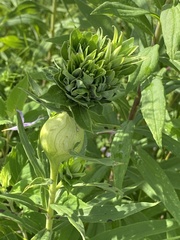
Procecidochares atra
fruit flyA second fruit fly on goldenrod, far less famous than the first, nearly as easy to find, and hiding what may be more than one species.
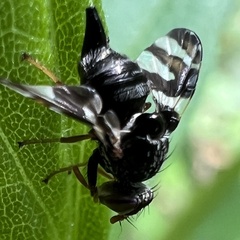
Rhopalomyia capitata
the giant bunch gallgall midgeThe bunch gall's larger cousin, and a reminder that most of what hatches out of a gall is not what made it.
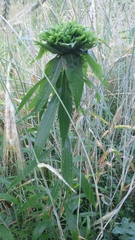
Asphondylia
the ambrosia midgesgall midgeThe largest gall genus on goldenrod, and the least settled: about thirty forms in this guide sit under this one name, most without a species of their own. Every gall the genus makes is lined with a fungus the midge carried in.
The other 43 forms recorded hereopen
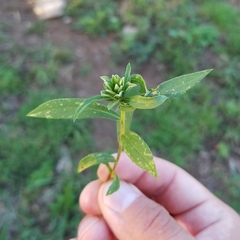 Asphondylia solidaginis leaf snapgall midgeglobular · pubescent, hairy, hairless or leafy · brown, orange, yellow or green · thin · monothalamous916established
- Asphondylia solidaginis budgall midgerosette · pubescent, stiff, hairy or leafy · brown, green or tan · thin or mycelium lining · monothalamous916single source
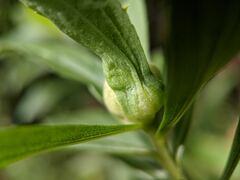 Dasineura folliculigall midgerosette · pubescent, bumpy, glaucous, hairy, hairless, leafy, mottled or succulent · brown, yellow, green or tan · thin738established
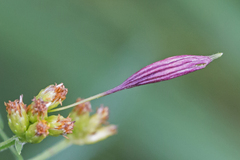 Rhopalomyia pedicellatagall midgelinear or spindle · glaucous, leafy, succulent or ribbed · yellow, green or purple · thin · monothalamous582established
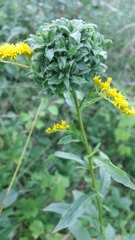 Asphondylia monacha summer generationgall midgeglobular, sphere, cluster or rosette · hairy or leafy · green · thin · monothalamous371established
- Asphondylia monacha spring generationgall midgerosette · pubescent, stiff, hairy or leafy · white or green · thin · monothalamous371single source
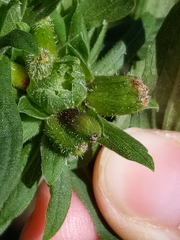 Rhopalomyia anthophilagall midgecylindrical · hairy · brown, red or green · thin · monothalamous328established
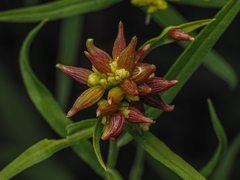 Rhopalomyia fusiformaegall midgelinear · bumpy, hairless or succulent · brown, red, yellow, green or purple · thin · monothalamous284established
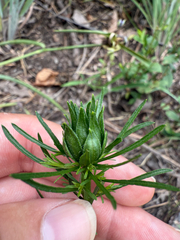 Asphondylia pseudorosa budgall midgerosette · leafy · white or green · thin · monothalamous265established
- Asphondylia pseudorosa capitulumgall midgeglobular · stiff, hairless, resinous dots, leafy, succulent or ribbed · brown, yellow or green · thin · monothalamous265established
- Asphondylia pseudorosa leaf snapgall midgeglobular · leafy · green · thin · monothalamous265established
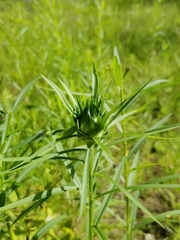 Rhopalomyia lobatagall midgeglobular · bumpy, succulent or mealy · white or green · thick · monothalamous or polythalamous222established
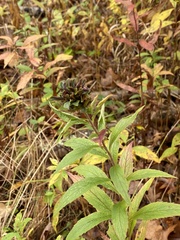 Asphondylia rosulata budgall midgeconical, globular or rosette · pubescent, hairy or leafy · green · thin · monothalamous69established
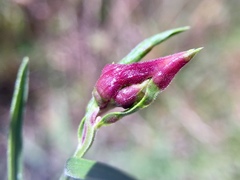 Dasineura carbonariagall midgespindle · pubescent, bumpy, hairy, hairless, resinous dots, leafy, mottled, succulent or wrinkly · green or purple · thin52established
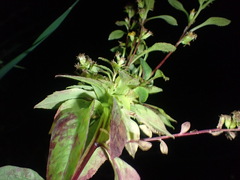 Asphondylia pumila summer generationgall midgeglobular, sphere, cluster or rosette · leafy · green · thin · monothalamous47established
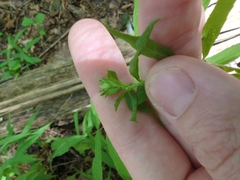 Asphondylia silvagall midgeglobular · stiff, hairless or leafy · green · thin · monothalamous24single source
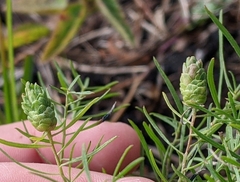 Asphondylia sp.elongated bud rosette gallgall midgeno traits recordedundescribed
- Asphondylia sp.bud rosette gallgall midgerosette · leafy · green · mycelium lining · monothalamousundescribed
- Asphondylia sp.bud rosettegall midgeglobular, sphere, cluster or rosette · pubescent, hairy or leafy · green · mycelium lining · monothalamousundescribed
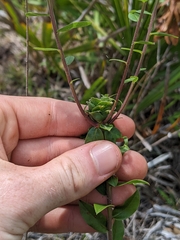 Asphondylia sp.bud rosette gallgall midgerosette · leafy · white or green · thickundescribed
- Asphondylia sp.larger bud rosette gallgall midgeconical, tuft, cluster or rosette · hairy or leafy · green · mycelium liningundescribed
- Asphondylia sp.bud rosette gallgall midgecluster or rosette · leafy · green · mycelium lining · monothalamousundescribed
- Asphondylia sp.bud rosette gallgall midgerosette · leafy · green · mycelium liningundescribed
- Asphondylia sp.aggregated bud rosette gallgall midgerosette · leafy · greenundescribed
- Asphondylia sp.small bud rosette gallgall midgeleafy · mycelium liningundescribed
- Asphondylia sp.bud rosette gallgall midgeleafy · gray or greenundescribed
- Asphondylia sp.bud rosette gallgall midgecluster or rosette · leafy · green · thin · monothalamousundescribed
- Asphondylia sp.bud rosette gallgall midgeleafy · greenundescribed
- Asphondylia sp.bud rosette clustergall midgerosette · leafy · green · thin or mycelium lining · monothalamousundescribed
- Asphondylia sp.bud rosette gallgall midgeno traits recordedundescribed
- Asphondylia sp.bud rosette gallgall midgeleafy · mycelium liningundescribed
- Dasineura sp.swollen petiole clustergall midgeglobular · hairless · white or greenundescribed
- Dasineura sp.wrinkled bud gallgall midgerosette · glaucous, hairless, resinous dots or wrinkly · greenundescribed
- Procecidochares sp.large distinct rosettesfruit flycluster, rosette or cup · leafy · green · thick · monothalamousundescribed
- Rhopalomyia sp.spongy gallgall midgeglobular · brown, green or tan · spongyundescribed
- unidentifiedbud gallnever rearedgreenundescribed
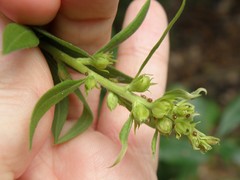 unidentifiedhairy ovoid gallnever rearedglobular · hairy · green · thin · polythalamousundescribed
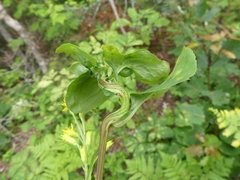 unidentifiedleaf blister gallnever rearedglobular · hairless · brown or greenundescribed
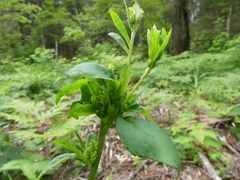 unidentifiedterminal leaf bunch gallnever rearedleafy · greenundescribed
- unidentifiedpetiolate leaf clusternever rearedrosette · leafy · greenundescribed
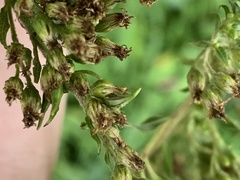 unidentifiedribbed flower gallnever rearedconical · hairy or ribbed · green or purpleundescribed
- gall midge sp.small bud rosette gallrosette · leafyundescribed
- gall midge sp.small bud rosette gallconical, tuft or rosette · hairless or leafy · green · thin · monothalamousundescribed
Flower
The last few centimetres, built late and abandoned early.
7 gall forms·3 with no name
The other 7 forms recorded hereopen
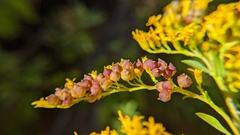 Schizomyia racemicolagall midgeglobular · hairless · red, yellow, green or purple · thin · monothalamous888established
- Rhopalomyia racemicolagall midgeconical, globular or cluster · hairy · gray or green · thin · monothalamous3established
- Rhopalomyia cruzianagall midgeno traits recordedno recordssingle source
- Rhopalomyia guttatagall midgeconical or cylindrical · glaucous · red, white or green · thin · monothalamousno recordssingle source
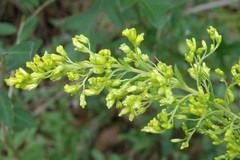 Rhopalomyia sp.cone gallgall midgeconical · hairy · pink or yellowundescribed
- Rhopalomyia sp.cylindrical smooth gallgall midgecylindrical · hairless · thinundescribed
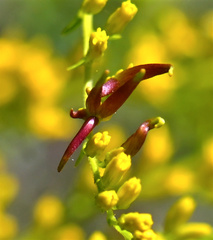 Rhopalomyia sp.fusiform inflorescence gallgall midgespindle or cluster · hairless · red or greenundescribed
Stem
Holds the plant up, hollow-hearted, and the easiest place to hide a winter.
31 gall forms·14 with no name
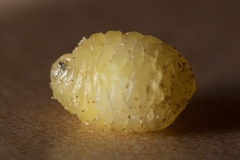
Eurosta solidaginis
the ball gallfruit flyA hard sphere the size of a marble, gripping the stem from the inside. The commonest gall on the commonest goldenrod, and the most intensively studied insect gall on Earth.
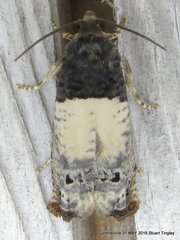
Epiblema scudderiana
the spindle gallmothAn elongate stem swelling, holding a caterpillar that spends the winter refusing to freeze, the exact opposite of the ball gall's strategy.
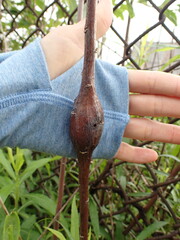
Gnorimoschema gallaesolidaginis
the elliptical gallmothA stretched swelling with a door cut in it before the tenant has any way of opening a door.
The other 28 forms recorded hereopen
 Asteromyia euthamiaegall midgehairless · black · mycelium lining · monothalamous2,346established
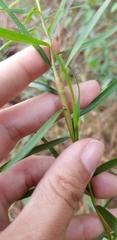 Epiblema desertanamothhairy, hairless, ribbed or ruptured/split · brown, green or tan · thick · monothalamous679single source
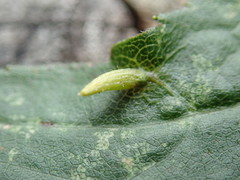 Rhopalomyia clarkeigall midgeconical · hairy or leafy · green · thin · monothalamous351established
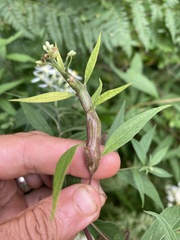 Gnorimoschema gallaeasterellamothspindle · hairless · brown, gray, red, green or purple · thick · monothalamous146established
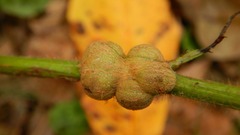 Asteromyia tumificagall midgeglobular · bumpy · brown, gray or green61established
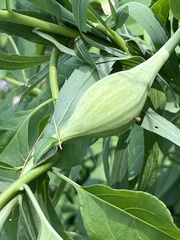 Gnorimoschema jocelynaemothspindle · hairless · green or purple · thick · monothalamous50single source
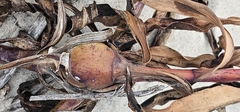 Gnorimoschema salinarismothspindle · glaucous or hairless · green or purple · thick · monothalamous34single source
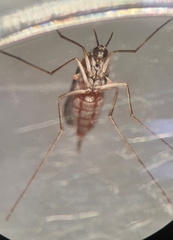 Lasioptera solidaginisgall midgespindle · bumpy, hairy or mealy · brown, gray or green · thick or spongy · polythalamous23established
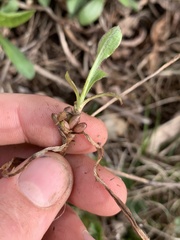 Rhopalomyia bulbulagall midgeconical · stiff or hairless · white or green · thin · monothalamous7established
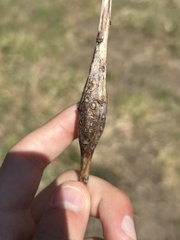 Gnorimoschema gallaespeciosummothspindle · hairless · brown, gray or green · thick · monothalamous3established
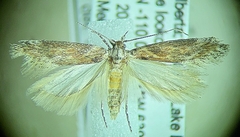 Gnorimoschema gibsoniellamothspindle · hairy or hairless · brown, gray or green · thick · monothalamous2single source
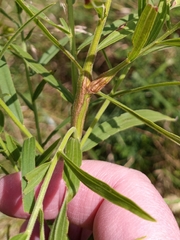 Lasioptera cylindrigallaegall midgeno traits recorded1established
- Eurosta lateralisfruit flyglobularno recordsestablished
- Rhopalomyia thompsonigall midgeglobular or cluster · stiff or succulent · brown, gray, black or tan · spongyno recordssingle source
- Asphondylia sp.terminal rosettegall midgerosette · green · monothalamousundescribed
- Gnorimoschema sp.pyriform stem swellingmothno traits recordedundescribed
- Gnorimoschema sp.ovoid stem swellingmothspindle · hairy · greenundescribed
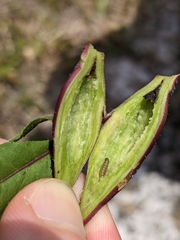 Gnorimoschema sp.elliptical stem gallmothspindle · purple · thick · monothalamousundescribed
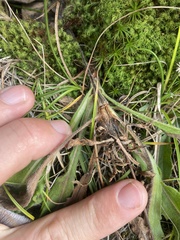 Gnorimoschema sp.pyriform stem swellingmothspindle · hairy · green · thick · monothalamousundescribed
- Gnorimoschema sp.spindle gallmothno traits recordedundescribed
- Gnorimoschema sp.spindle gallmothspindle · hairless · red, green or purpleundescribed
- Gnorimoschema sp.pyriform stem swellingmothspindle · hairy · greenundescribed
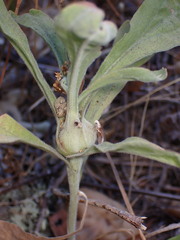 Gnorimoschema sp.spindle gallmothglobular or spindle · pubescent · gray or green · thick · monothalamousundescribed
- Rhopalomyia sp.stem cluster gallgall midgeconical, globular or cluster · hairy · gray · thin · monothalamousundescribed
- Rhopalomyia sp.teardrop bulbletlike gallgall midgemonothalamousundescribed
- unidentifiedpetiole blisternever rearedhemispherical · hairyundescribed
- unidentifiednarrow stem swellingnever rearedlinear, spindle or cylindrical · brown, gray or greenundescribed
- unidentifiedsmall fusiform stem swellingnever rearedspindle · hairy · greenundescribed
Leaf
Thin, disposable, replaced annually, and still worth building a house on.
13 gall forms·6 with no name
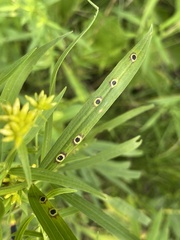
Asteromyia carbonifera
the blister gallgall midgeThe only gall here that the plant does not build. A midge carries a fungus, and the fungus makes the chamber.
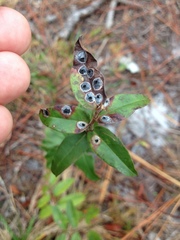
The other 12 forms recorded hereopen
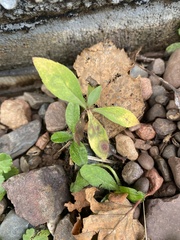 Asteromyia modestagall midgeleafy · green or purple · thin · monothalamous134established
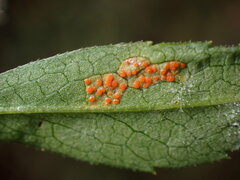 Coleosporium montanumrust fungusorange85unknown
- Asphondylia rosulata leaf snapgall midgeglobular · pubescent, stiff, hairy or leafy · yellow, green or tan · thin · monothalamous69single source
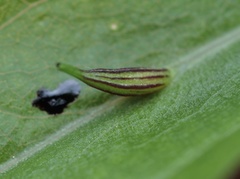 Rhopalomyia inquisitorgall midgeconical · glaucous, leafy or ribbed · brown, white, green, black or purple · thin · monothalamous41single source
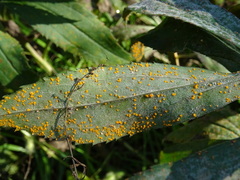 Coleosporium solidaginisrust fungusorange36unknown
- Rhopalomyia ginagall midgeconical · hairless · yellow, green, purple or tan · thin · monothalamousno recordssingle source
- Asphondylia sp.leaf snapgall midgeglobular or hemispherical · bumpy or hairless · orange, yellow, green or tan · mycelium lining · monothalamousundescribed
- Asphondylia sp.leaf snapgall midgeglobular · leafy · green or tan · thin or mycelium lining · monothalamousundescribed
- Asteromyia sp.midrib gallgall midgemycelium liningundescribed
- Rhopalomyia sp.ribbed leaf gallgall midgespindle · hairless or ribbed · greenundescribed
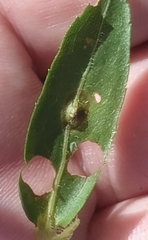 unidentifiedmidrib blisternever rearedhemispherical · leafy · gray or greenundescribed
- gall midge sp.midrib swellingno traits recordedundescribed
Rhizome
Below the soil line. Perennial, starch-filled, and almost never looked at.
6 gall forms·0 with no name
Eutreta novaeboracensis
the rhizome gallfruit flyBelow the soil line, on the underground stems, where the field guide runs out.
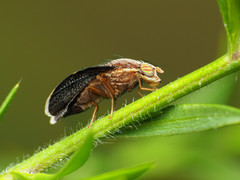
The other 5 forms recorded hereopen
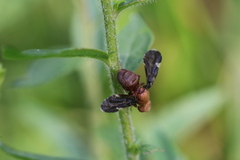 Eurosta commafruit flyno traits recorded235unknown
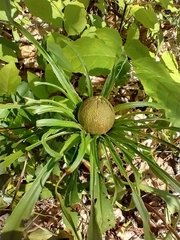 Rhopalomyia hirtipesgall midgeglobular or rosette · succulent, ruptured/split or mealy · brown, gray, white, yellow, green or tan · thick or spongy · polythalamous65established
- Asphondylia pumila spring generationgall midgeno traits recorded47single source
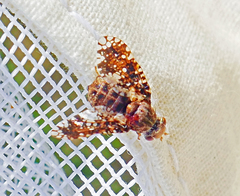 Eurosta cribratafruit flycylindrical · monothalamous11established
 Eurosta floridensisfruit flyno traits recorded8established
Ten years on
This guide exists because of an hour of audio recorded in a meadow outside Buffalo in September 2015, in which two people found three galls, failed to find a fourth, and said out loud, repeatedly, that they did not know. These are the things they left open, in their own words.
Quotations are transcribed from the recording and lightly punctuated. The recording does not label who is speaking, so none of them is attributed to one host or the other.
- answered since
The two winters
“He’ll hibernate over winter as an adult… and then the eggs overwinter.”They were working through the elliptical gall moth on air, could not reconcile their sources, and said so. What they landed on has two winters in it: the adult through one, the egg through the next. The literature describes a single year: adults emerge in late summer, lay in autumn, and the egg alone overwinters.15 They were right that the sources conflict, and right to distrust them.
- answered since
The bunch gall’s hosts
“Eastman says you can find bunch galls on many varieties… other sources just say Canada goldenrod, that’s it. So yeah, I don’t know — there’s some debate out there.”45There was. The revision settles it at three: S. altissima, S. canadensis and S. rugosa.5 One of the three has since become the hard case: R. capitata was reared from a single-chambered rosette gall on S. rugosa in 2024, so a bunch gall on rough-stemmed goldenrod can no longer be assigned to species by sight.304
- answered since
The bunch gall’s life cycle
“Unfortunately we don’t know a crazy ton about this one.”Their own show notes later carried most of it: two generations, a small spring gall preceding the conspicuous summer rosette.1 The rest is in the 2009 revision, including the winter: the larvae go down into the rhizomes, which the show notes also had right.5 See the entry.
- reclassified since
Tall goldenrod and Canada goldenrod
“The flower length goes with tall goldenrod, but the stem being smooth near the base, that goes with Canada goldenrod. What do we think?” — “I don’t know.”They were holding a plant that keyed both ways, and noted that tall goldenrod was by then being treated as a variety of Canada goldenrod. Flora of North America and Semple’s later work keep S. altissima and S. canadensis as separate species.48 The plant in their hands was genuinely ambiguous; the classification has since moved back under it.
- unverified
The rough-stemmed goldenrod
“It had a ball gall, and it should not have — if it’s a rough stem goldenrod.”A plant keyed to Solidago rugosa, carrying a ball gall it had no business carrying, and the conclusion drawn on air was that the plant must have been misidentified. Gallformers lists S. rugosa among the hosts of Eurosta solidaginis. The identification may well have been right the first time.
But nobody has traced it to a source. That host record carries no citation in the database and the page is marked in progress. Until it is traced to Novak & Foote or to Abrahamson & Weis, it is a record, not a fact.243 - answered since
The hormone paper
“Back in 2002 there was a paper that came out… it turned out that this newer study reveals that no, they’re actually synthesizing it themselves.”The paper is Mapes & Davies, and it is 2001, not 2002; their own show notes have it right.110 They also had it slightly stronger than its authors did. It identified four cytokinins and found one of them at some fifty times stem concentration inside the larva; what it ruled out was accumulation from plant tissue, leaving synthesis as the inference. The word in the paper is “may”.10 Everything since has gone their way regardless; see the ball gall.
- still open
The parasitoids
“The parasitoids are not even that well documented. There’s a PhD project for somebody.”Still broadly true, and not only of the parasitoids. Fifty of the gall forms in this guide have no name at all.